

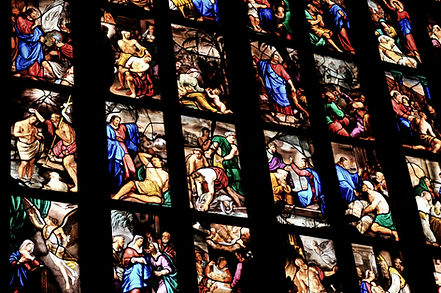

Mary Magdalene
WITNESS TEACHER BELOVED GRAIL
Dogma, Conflation, and Narrative Control
By the late 4th and early 5th centuries, Mary Magdalene’s identity was merged with other women in the gospels, particularly the unnamed “sinful woman.” This conflation reframed her from authoritative witness into penitent sinner.
This shift served institutional stability:
-
A woman who repents is safe.
-
A woman who teaches is dangerous.
Only in recent centuries has the institutional Church formally corrected this conflation, restoring her role as a primary resurrection witness.
Early Non-Canonical Texts (The Magdalene as Teacher)
Several early Christian texts excluded from the canon present Mary Magdalene as a teacher, interpreter, and spiritual authority, often in tension with male disciples.
The Gospel of Mary
The Gospel of Mary is one of the most significant early Christian texts excluded from the canonical New Testament. Preserved only in fragmentary form, primarily through the Berlin Codex (5th century, with earlier Greek originals likely from the 2nd century), the text presents Mary Magdalene as a primary spiritual authority in the immediate aftermath of Yeshua’s departure. Unlike canonical gospels, which emphasize external events and institutional continuity, the Gospel of Mary centers inner knowledge, direct experience, and the soul’s liberation.
The text opens with the disciples in grief and fear. Without their teacher’s physical presence, they are anxious, uncertain, and preoccupied with persecution and survival. Mary steps into this emotional vacuum not as a subordinate, but as a stabilizing presence. She comforts the group, reminding them that fear arises from misunderstanding and that the teachings they received were meant to free, not terrify. From the outset, Mary functions as pastoral guide, emotional anchor, and interpreter of meaning.
When questioned, Mary recounts teachings she received privately from the Savior. These teachings do not concern laws, sin, or obedience, but the nature of the soul, the structure of reality, and the path of inner ascent. Central to the Gospel of Mary is the idea that salvation is not achieved through external authority or ritual compliance, but through gnosis: direct, lived knowledge of one’s true nature and origin.
A core teaching describes the soul’s journey after death. The soul ascends through a series of hostile powers or forces, often interpreted as psychological, cosmic, or systemic constraints rather than literal demons. These forces represent fear, desire, ignorance, and domination. The soul is interrogated at each level, challenged to justify its freedom. Liberation occurs not through submission, but through clarity, remembrance, and refusal to be bound by false authority. The soul declares that it belongs to no ruler, that it has transcended illusion, and that it returns to its source through knowledge.
This cosmology radically reframes the problem of “evil.” Rather than sin against divine law, the primary obstacle is forgetfulness. Suffering arises from mistaking external systems for ultimate truth. Freedom arises when the soul remembers its origin and refuses to consent to domination. This message aligns strongly with other Sophia-stream and Gnostic traditions, where awakening is internal, experiential, and often counter-institutional.
Mary’s authority, however, is immediately contested. Peter challenges her, asking whether the Savior truly would have taught such things privately to a woman. Andrew echoes this doubt, questioning the legitimacy of her vision and implying that her teachings may be deceptive or imagined. This conflict is not subtle. It exposes a fault line in early Christianity between charismatic, experiential authority and emerging hierarchical control.
Levi intervenes decisively, defending Mary. He argues that if the Savior loved her more, or entrusted her with deeper understanding, that choice itself carries authority. Levi rebukes Peter for his anger and rigidity, suggesting that Peter’s resistance stems not from truth, but from habit and fear. The text closes not with institutional resolution, but with the group recommitting themselves to teaching the message of liberation, implicitly under Mary’s influence.
The Gospel of Mary thus presents an early Christian vision in which:
-
Authority flows from insight and embodiment, not gender or office
-
The divine is encountered within, not mediated exclusively through leaders
-
Fear is a tool of control, not a divine mandate
-
The feminine is aligned with wisdom, interpretation, and transmission



How to Read This Page
Mary Magdalene exists at the intersection of history, theology, myth, and living devotion. This tab intentionally preserves multiple layers of meaning.
-
Historical material reflects what can be reasonably inferred from early texts.
-
Non-canonical material reflects early alternative Christian traditions.
-
Mythic and esoteric material reflects medieval legend, mystery schools, and later initiatory streams.
-
Speculative traditions are included clearly and respectfully, not dismissed, not asserted as singular truth.
Mystery is not a flaw here. It is the medium.
Historical Identity (Canonical Foundations)
Mary Magdalene, also known as Mary of Magdala, appears in all four canonical gospels as a central figure in the final days of Jesus of Nazareth (Yeshua).
What is broadly agreed upon by scholars:
-
She was a disciple, not merely a follower.
-
She is present at the crucifixion when most others flee.
-
She is the first witness of the resurrection.
-
She is the one instructed to carry the message to the male disciples.
This role later earns her the title Apostola Apostolorum — Apostle to the Apostles.
The canonical phrase “seven demons” has historically been misinterpreted as moral or sexual sin. In the cultural and symbolic language of the time, it more likely indicates maladies or spiritual crisis, followed by restoration. One can even posit that the seven demons are representative of the 7 deadly sins as an inversion of the seven chakras. Much of her teachings seem to reference this form of enlightenment and ascension.
There is no canonical basis for identifying Mary Magdalene as a prostitute. That narrative emerges centuries later.








Key Passages from the Gospel of Mary
(with interpretive commentary)
“Do not grieve or be distressed, nor be irresolute, for his grace will be with you all and will protect you.”
This opening reassurance establishes Mary Magdalene as the emotional and spiritual stabilizer of the group. While the other disciples remain frozen in fear after Yeshua’s departure, Mary immediately reframes the situation. The message is clear: the teachings were meant to liberate, not terrify. Authority here emerges through presence and clarity, not command.
“Where the mind is, there is the treasure.”
This line encapsulates the Gospel’s core teaching: salvation is internal, not external. Liberation is not found in law, hierarchy, or ritual obedience, but in conscious orientation. The “treasure” is not a future reward, but awakened perception. This sharply contrasts with later institutional emphases on belief and compliance.
“The soul answered, ‘I did not see you; nor did I hear you. But I know you.’”
Spoken during the soul’s ascent past hostile powers, this passage illustrates the text’s radical redefinition of power. The soul is not freed by defeating enemies, but by withholding recognition. Domination collapses when false authority is no longer acknowledged. Knowledge here functions as sovereignty.
Peter said to Mary, ‘Did the Savior really speak with a woman without our knowing it?’
This moment exposes the fault line running beneath early Christianity. Peter’s objection is not theological, but gendered. His resistance reveals anxiety over who is permitted to transmit teaching. The text does not soften this conflict; it presents it as real, unresolved, and foundational.
“Surely the Savior knows her very well. That is why he loved her more than us.”
(Levi speaking)
Levi’s defense reframes authority entirely. Love follows understanding, not favoritism. If Mary received deeper teaching, it is because she was capable of receiving it. This passage quietly dismantles hierarchical entitlement and affirms discernment over rank.
Magdalene’s Teaching: Core Themes
Across these passages, the Gospel of Mary advances several interwoven teachings:
-
Fear is not divine; it is a product of misunderstanding
-
Sin is replaced by ignorance as the central human problem
-
Liberation comes through remembrance, not forgiveness
-
Authority belongs to insight, not position
-
The soul is sovereign when it refuses false rulers
Mary Magdalene emerges not as a messenger of doctrine, but as a cartographer of consciousness, guiding others through the inner terrain of liberation.
Contrast: Gospel of Mary vs. Canonical Resurrection Narratives
The canonical gospels and the Gospel of Mary present two different post-resurrection emphases, each revealing a distinct vision of what the movement was meant to become.
Canonical Resurrection Narratives
-
Focus on physical resurrection and historical validation
-
Emphasize appearance, proof, and recognition
-
Mary Magdalene is the first witness, but authority quickly transfers to the male disciples
-
The message moves outward: preach, baptize, establish community
-
Lays groundwork for institutional continuity
Gospel of Mary
-
Focuses on interior resurrection and spiritual ascent
-
Emphasizes understanding, remembrance, and inner freedom
-
Mary remains a teacher and interpreter, not merely a witness
-
The message moves inward: know yourself, overcome fear, refuse domination
-
Preserves a mystical, experiential Christianity resistant to hierarchy
In the canonical texts, resurrection secures belief. In the Gospel of Mary, resurrection awakens knowledge. Both traditions honor Mary Magdalene as the first to encounter the risen Yeshua. Only one allows her to teach what that encounter means.
Importantly, the text does not portray Mary as powerful because of romance or proximity, but because of understanding. She is not authoritative because she is beloved; she is beloved because she understands.
The exclusion of the Gospel of Mary from the canon reflects broader historical pressures to consolidate doctrine, suppress plural interpretations, and restrict who could legitimately speak for the tradition. Its survival, even in fragments, suggests that an alternative Christianity once flourished alongside the institutional form, one in which Mary Magdalene stood as teacher, visionary, and bearer of gnosis.
Within devotional and esoteric frameworks, the Gospel of Mary preserves the image of Magdalene as a priestess of remembrance, one who carries the map of liberation not in law, but in lived wisdom. She does not found a church. She keeps a flame.
The Gospel of Philip
Here Mary is described as Yeshua’s koinōnos (companion). The text references intimate gestures that have sparked centuries of debate. In ancient initiatory language, such intimacy often signals shared gnosis, not scandal. References to the Bridal Chamber and Hieros Gamos are made, which lines up well with the theory that Mary was an initiate of Essene or Isis Mystery Schools.
The text frames Mary as the one who understands.
Pistis Sophia & Sophia-stream texts
In these writings, Mary Magdalene asks the most insightful questions and receives praise for her spiritual comprehension. She functions as a Sophia figure, embodying wisdom itself.
Mythic Lineage: Essenes, Initiation, and the Magdalene School
Within esoteric and mystical traditions, Mary Magdalene is remembered not only as a disciple, but as a fully initiated teacher.
According to these traditions:
-
She was born into a wealthy merchant family as a Gentile, educated, multilingual, and exposed to philosophical and mystical currents.
-
Her meeting with Yeshua may have been arranged or anticipated, not accidental.
-
Both figures are associated with Essene-adjacent initiatory environments, where ritual purity, communal living, healing, and mystical interpretation of scripture were practiced.
-
In ancient ritual contexts, hair functioned as an extension of the body’s spiritual charge, associated with vitality, devotion, and vow. By loosening her hair and using it to anoint and wipe Yeshua’s feet, Mary Magdalene performs an embodied rite that collapses boundaries between altar and body, priestess and offering. This act signals ritual intimacy and authority, marking her not as a passive devotee but as one fluent in sacred gesture, consent, and the language of consecration.
-
Mary functioned as a teacher of inner mysteries, especially those concerning embodiment, love, and the reconciliation of spirit and matter.
-
Anointing Oil & Priestess Authority- Mary Magdalene’s use of anointing oil, traditionally identified as spikenard, carries strong priestess and initiatory symbolism. In the ancient world, costly aromatic oils were reserved for kings, priests, and the dead, marking moments of consecration, transition, and sacred authority. Her act is not one of excess or sentiment, but of ritual recognition, publicly affirming Yeshua’s role while simultaneously revealing her own literacy in temple-grade sacred practice.
Spikenard itself, imported from the Himalayan region, was rare, expensive, and associated with burial rites, healing, and altered states. Some traditions suggest the oil may have been a compound blend, combining spikenard with other aromatic resins and botanicals used in priestly or mystery contexts. Within this lens, Mary Magdalene does not merely anoint, she performs a rite of passage, acting as a ritual specialist whose authority arises from knowledge, intimacy, and embodied devotion rather than institutional rank.
This stream presents Magdalene not as subordinate, but as counterpart. Where Yeshua embodies Logos, Magdalene embodies Sophia.
This is not provable history. It is initiatory myth — the kind that persists because it carries something true at a symbolic and spiritual level.
The Flight to the South of France (Provençal Tradition)
Medieval tradition holds that after the resurrection and subsequent persecutions, Mary Magdalene fled the Holy Land by boat and arrived in southern France, specifically the region of Provence. This tradition does not originate in the canonical gospels, but emerges powerfully in medieval hagiography, regional devotion, and pilgrimage culture, becoming one of the most enduring narratives of the Western Magdalene stream.
Key elements of this tradition include:
-
Landing near what is now Saintes-Maries-de-la-Mer, a liminal coastal region long associated with holy exiles, travelers, and sacred feminine devotion
-
Years of teaching and evangelizing, during which Magdalene is remembered as a transmitter of Christian wisdom and healing in southern Gaul
-
Later withdrawal into contemplative solitude at Sainte-Baume, where she is said to have lived for decades as a mystic, ascetic, and hermit in a cave sanctuary
-
Relics venerated at Saint-Maximin-la-Sainte-Baume, which became a major pilgrimage center beginning in the medieval period
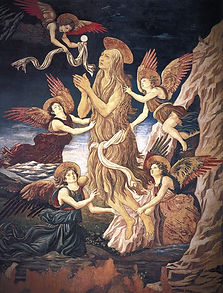
Pilgrimage to the Sainte-Baume cave continues to this day. According to tradition, Magdalene spent many years there in prayer, contemplation, and communion with the divine, sustained by angels or divine provision. In symbolic terms, the cave represents the womb of the Earth, the initiatory descent, and the space of transformation where embodied devotion ripens into gnosis. Her retreat does not signify withdrawal from the world, but integration of wisdom.
Companions and Theoretical Lineages
Traditions vary regarding who traveled with Mary Magdalene. Some accounts name Lazarus, Martha, and other early followers. More speculative and esoteric traditions suggest additional figures, including Thomas the Apostle, linking the Provençal stream to eastern Christian mysticism and inner-knowledge traditions.
Another enduring figure in Provençal lore is Saint Sarah, sometimes called Sarah-la-Kali. While not identified explicitly as Magdalene’s daughter in historical sources, later traditions and mythic interpretations associate her with the feminine lineage of the Magdalene current. Within this framework, Sarah represents continuity, embodiment, and inheritance, whether literal or symbolic. These traditions are theoretical and devotional, not historically provable, and are held here as part of the mythic record rather than asserted fact.
Alternative Historical View
An alternative historical view argues that the Provençal tradition arose centuries later and reflects symbolic geography rather than literal travel. From this perspective, southern France becomes a mythic landscape onto which Magdalene’s memory was projected in order to anchor feminine sanctity, relic devotion, and regional identity. Both views are held here. In the mythic and devotional lens, Magdalene does make it to France, becoming the root of a Western mystery stream that later flowers in Grail legends, chivalric codes, and Marian devotion.

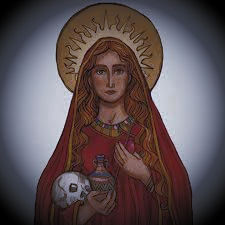
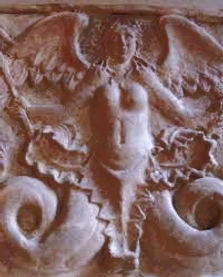


The Magdalene Current, the Cathars, and the Knights Templar
Southern France later became the stronghold of the Cathars, a Christian movement emphasizing purity, inner knowledge, and resistance to centralized ecclesiastical authority. While no direct historical link can be proven between Mary Magdalene and the Cathars, many scholars and esoteric traditions note strong thematic resonances: reverence for spiritual purity, suspicion of institutional power, and the survival of alternative Christian lineages in the region.
Following the violent suppression of the Cathars, elements of Provençal sacred geography and legend appear to re-emerge within the symbolism and lore of the Knights Templar. Templar devotion to relics, sacred feminine symbolism, and hidden knowledge has fueled long-standing speculation that they acted as guardians of a suppressed spiritual lineage connected to the Magdalene tradition.
The Rose Line and the Grail Tradition
Within Grail mythology, the Magdalene becomes associated with the Rose Line: a symbolic and sometimes literal lineage representing the transmission of wisdom through blood, body, and memory. The rose functions as a sign of secrecy, love, sovereignty, and hidden knowledge. In this framework, the Grail is not merely a cup, but a vessel of continuity, whether understood as lineage, teaching, or embodied gnosis.
The Provençal Magdalene thus stands at the crossroads of history, myth, devotion, and resistance, her story resurfacing wherever spiritual authority rooted in experience, love, and embodiment challenges rigid hierarchy.
She is not preserved through certainty.
She survives through continuity.
The Fleur-de-lis
The fleur-de-lis is among the most enduring and multilayered symbols in Western sacred iconography. Long before its adoption as a heraldic emblem of French royalty, the lily appears across ancient cultures as a sign of purity, sovereignty, rebirth, and divine order. Within Christian symbolism, the lily becomes associated with sanctity and divine favor, yet its deeper resonance lies in its connection to the sacred feminine as vessel, womb, and bearer of wisdom.
Within Magdalene traditions, the fleur-de-lis emerges as more than a decorative motif. It functions as a cipher: a visual shorthand encoding memory, lineage, and continuity. In Provençal and later Grail-influenced interpretations, the fleur-de-lis is associated with Mary Magdalene not because of official doctrine, but because of symbolic convergence. The lily’s form mirrors the chalice, the womb, and the triple-petaled structure often read as body, soul, and spirit, or maiden, mother, and wise woman.
In medieval France, the fleur-de-lis became inseparable from the idea of divinely sanctioned kingship. Esoteric interpretations suggest that this association may reflect not merely political authority, but guardianship of a sacred trust. Within Rose Line and Grail traditions, that trust is understood as the preservation of a suppressed spiritual current tied to Magdalene memory: a Christianity rooted in embodiment, love, and inner knowing rather than hierarchy alone.
The lily also carries strong resurrection symbolism. It blooms from a bulb buried in darkness, rising again in luminous form. This imagery resonates powerfully with Magdalene as the first witness of resurrection, and with her later mythic role as a carrier of wisdom through exile, concealment, and re-emergence. In this sense, the fleur-de-lis becomes a sign not only of purity, but of what survives persecution by going underground.
In illuminated manuscripts, cathedral ornamentation, and sacred architecture throughout southern France, lilies appear repeatedly in regions associated with Magdalene devotion. Whether consciously encoded or culturally inherited, these repetitions suggest a symbolic landscape shaped by memory. The fleur-de-lis thus functions as a marker of place, signaling terrain where feminine sanctity, relic tradition, and Grail mythology intersect.
Esoterically, the fleur-de-lis has also been read as a flame or living spark, echoing the idea of a wisdom lineage carried through individuals rather than institutions. In this interpretation, Mary Magdalene is not the end of the line, but the root of a current, and the fleur-de-lis signifies transmission rather than possession. It is not a crown worn, but a seed passed on.
Importantly, no medieval text explicitly names the fleur-de-lis as “Mary Magdalene’s symbol.” Its power lies precisely in this ambiguity. Like Magdalene herself, the symbol resists containment, operating in the liminal space between devotion, myth, and coded remembrance. Where doctrine closes, symbol keeps speaking.
In the Magdalene current, the fleur-de-lis stands as an emblem of hidden sovereignty, the quiet authority of wisdom carried in the body, the land, and the lineage of those who remember. It signals a form of holiness that does not rule from thrones, but endures through love, secrecy, and continuity.
Suppression, Survival, and the Magdalene Current
Why does Mary Magdalene keep returning?
Because she represents what institutions struggle to contain:
-
A woman who knows
-
A spirituality that includes the body
-
Authority rooted in experience, not hierarchy
-
Love as a path to gnosis, not a distraction from it
Across centuries, her image oscillates between saint, sinner, mystic, lover, teacher, exile, and queen.
She survives because she adapts.
Scrolls & Sources Commonly Associated with Mary Magdalene
-
Canonical Gospels (Matthew, Mark, Luke, John)
-
Gospel of Mary
-
Gospel of Philip
-
Pistis Sophia
-
Gospel of Thomas (indirect thematic overlap)
-
Medieval Golden Legend
-
Provençal relic traditions
-
Grail romances and chivalric myth
-
Modern esoteric reconstructions and feminist theology
Contemporary Magdalene Currents & Living Traditions
In the modern era, a number of spiritual paths, communities, and mystery-school–style offerings have emerged drawing inspiration from Mary Magdalene as teacher, priestess, and carrier of the Rose or Grail current. These movements are not historically continuous lineages in an academic sense, but rather contemporary expressions engaging Magdalene symbolism, myth, and devotional themes.
🔗The Path of the Magdalene / Magdalene Path
An initiatory spiritual path centered on Mary Magdalene as a guide for embodied feminine wisdom, healing, and remembrance. This community emphasizes the Magdalene as priestess, teacher, and bearer of the Rose current, offering courses, circles, retreats, and pilgrimages, particularly connected to Glastonbury and southern France.
A contemporary mystical path using rose symbolism as a framework for inner initiation, self-love, balance, and divine feminine remembrance. Mary Magdalene is presented as one of the guiding figures within a broader Rose Sisterhood archetype, blending Christian mysticism with goddess and feminine spirituality.
🔗Sacred Rose Mystery School / Magdalene Mastery Path
A structured, ceremonial program focused on Rose initiation, embodied spirituality, and Magdalene-inspired teachings. This path presents the body as a living altar and chalice, drawing heavily on Magdalene, Grail, and sacred feminine symbolism.
🔗Magdalene Priestess & Priest Training
A year-long initiatory training oriented toward embodying Magdalene teachings through ritual, devotion, and spiritual leadership frameworks. Emphasizes remembrance, sacred union, and service through Magdalene archetypal wisdom.
🔗Magdalene Experience / Magdalene Oracle & Healing Work
Individual practitioners and small groups offering Magdalene-focused sessions, anointing rituals, oracle work, and guided devotional experiences. These are typically personalized offerings rather than centralized organizations, emphasizing direct connection with Magdalene imagery and presence.
🔗Community Circles & Grassroots Groups
Informal online communities dedicated to Mary Magdalene devotion, discussion, pilgrimage sharing, and spiritual support. These groups vary widely in tone and theology, ranging from Christian mysticism to esoteric and goddess-oriented frameworks.
📜 Classic and Non-Canonical Texts
A public domain or freely accessible translation of this Gnostic dialogue, focused on Mary’s post-resurrection teachings.
Part of the Nag Hammadi Library; includes passages about Mary and symbolic teaching on sacraments and union.
Collection of sayings attributed to Yeshua with Gnostic character; no narrative but thematic overlap with inner teaching.
A major Gnostic scripture focused on the soul’s journey, teachings of Jesus after resurrection, and Sophia motifs.
📚 Larger Manuscript Source Collections
Central index for many early non-canonical texts, including those above and others of related interest.
🔗Gnostic Society Library: Full Texts
General library of Gnostic scriptures, including Pistis Sophia, Gospel of Thomas, Gospel of Mary, and more.
📜 Canonical Texts & Related
For the Canonical Gospels (Matthew, Mark, Luke, John) you can link standard Bible resources (e.g., Bible Gateway, Biblia.com, or the public-domain World English Bible), e.g.,
🔗 https://www.biblegateway.com- select the World English Bible translation.
📚 Medieval & Later Traditions
-
"Medieval Golden Legend" - by William Caxton
-
"Guardians of the Holy Grail Mysteries" - by Mark Amaru Pinkham
🧠 Scholarly & Interpretive Resources
While not primary texts, the following can help contextualize these writings historically:
🔗The Nag Hammadi Library in English (PDF) — compilation of many of these texts.


Please also check out our Matriarchy Defined page!

"There is no sin. We follow THE WAY. An Ethos of alignment, as inspired by the Gnostic Gospel of Mary Magdalene. In the Magdalene tradition, separation from the divine is not caused by wrongdoing, but by forgetting one's nature. Remembering restores wholeness.
-excerpt from our Ethos