


Meet The Faiths
Abrahamic Religions
The Three Traditions of the Abrahamic family:
Each tradition understands itself as a continuation, correction, or fulfillment of earlier revelation, which both unites and divides them.
Click each family for a detailed breakout

A Shared Lineage of Covenant, Text, and Moral Law
The Abrahamic religions are a family of monotheistic traditions that trace their spiritual ancestry to the patriarch Abraham, a figure associated with covenant, ethical obligation, and relationship between humanity and a singular divine Source. This family emerged in the ancient Near East and is defined by linear time, prophetic revelation, sacred law, and authoritative scripture. Today, Judaism, Christianity, and Islam together represent over half of the world’s population, not because they emerged independently, but because they belong to the same religious family lineage. Each tradition arose from a shared ancestral narrative rooted in the ancient Near East and defines itself in relation to the same foundational figures, texts, and ethical frameworks. The divisions between them were not the result of separate spiritual origins, but of differing conclusions about succession, authority, and revelation: who speaks for God, when revelation is complete, and how divine law should be lived. Judaism maintains covenant through law and communal continuity, Christianity reframes the lineage through the figure of Jesus and a new covenant, and Islam positions itself as a restoration and final articulation of the same monotheistic stream. Seen this way, the global dominance of the “Big Three” is best understood not as three unrelated traditions competing for truth, but as a single family whose internal branching, amplification, and historical power dynamics shaped much of the modern religious world.
These traditions share:
-
Monotheism: belief in one supreme, singular God
-
Scriptural centrality: sacred texts as vessels of divine revelation
-
Prophetic lineage: figures such as Abraham, Moses, David, and others
-
Moral law: ethics grounded in divine command rather than cyclical cosmology
-
Linear time: history moving toward fulfillment, judgment, or redemption
They also share overlapping narratives, characters, laws, and ethical frameworks, often recounting the same events through different theological lenses.
Where and Why They Diverged
Judaism
Judaism emerged first, forming around the identity of the Israelite people, covenantal law (Torah), and communal practice. It does not center on universal conversion, nor does it frame later figures as fulfilling or superseding the covenant. Authority rests in law, tradition, and interpretation rather than a single messianic event.
Christianity
Christianity arose from a Jewish context but diverged sharply with the belief that Jesus was the Messiah and divine Son of God. This introduced doctrines of incarnation, salvation through Christ, and a new covenant. Over time, Christianity expanded beyond Jewish law, embraced Gentile populations, and developed institutional hierarchies and creeds.
Islam
Islam emerged in the 7th century CE, identifying itself as a restoration of pure monotheism. It recognizes Abraham, Moses, and Jesus as prophets, but holds Muhammad as the final prophet and the Qur’an as the final revelation. Islam rejects the divinity of Jesus and emphasizes submission to God through law (Sharia), prayer, and communal practice.
The primary division within the Abrahamic religions originates from a shared lineage dispute rather than separate spiritual origins. All three traditions trace their roots to Abraham, but diverge over the succession of covenant through his descendants. Judaism locates the covenantal line through Abraham’s son Isaac and his descendants, culminating in the Israelite people and the Mosaic law. Christianity emerges from this same lineage, later interpreting Jesus as the fulfillment of that covenant. Islam, by contrast, traces the covenant through Abraham’s firstborn son Ishmael, affirming him as a legitimate and blessed heir and viewing Muhammad as the final prophet in this line. The historical dominance and internal tension of the Abrahamic traditions are best understood not as competing revelations, but as a single ancestral family whose disagreement over inheritance, authority, and continuation of revelation produced enduring theological and cultural divisions.
Despite their differences, the Abrahamic religions share:
-
A single Creator God who acts in history
-
Ethical responsibility toward others
-
Emphasis on justice, charity, and accountability
-
Sacred storytelling as moral instruction
-
Ongoing tension between law, mercy, and interpretation
They also share internal diversity, debate, mysticism, reform movements, and periods of both coexistence and conflict.
Important Context
Historically, these religions developed within environments shaped by empire, exile, conquest, and social upheaval. Their similarities have often fueled rivalry, as each tradition has at times claimed exclusive legitimacy. Understanding them as members of a shared family helps contextualize both their deep resonance and their long-standing conflicts.
This project approaches the Abrahamic religions not as competing truth claims, but as interconnected human responses to questions of meaning, morality, power, and the divine.
Gnosticism
Gnosticism
Direct Knowing, Divine Immanence, and the Critique of False Authority
Approximate Date Range: c. 100 BCE – 400 CE (with later suppressed
continuations and revivals)
The Three Traditions of Gnosticism are:
Orientation
Gnosticism is best understood not as a single religion, but as a family of related spiritual movements that emerged in the Hellenistic Mediterranean world during the late Second Temple Jewish period and the early centuries of Christianity. Rather than centering belief, law, or ritual obedience, Gnostic traditions emphasized gnosis: direct, experiential knowing of divine reality.
Relationship to Judaism and Christianity
Gnosticism arose at a historical crossroads where Judaism, early Christianity, Greek philosophy, and mystery traditions overlapped.
-
From Judaism, Gnosticism inherited cosmology, symbolic myth, and ethical seriousness.
-
From early Christianity, it adopted the figure of Christ as a revealer of hidden truth.
-
From Platonism and mystery schools, it absorbed metaphysical dualism, emanation theory, and initiatory insight.
The key divergence occurred over authority and cosmology:
-
Orthodox Judaism emphasized covenant, law, and communal continuity.
-
Emerging orthodox Christianity emphasized creed, hierarchy, and institutional authority.
-
Gnosticism rejected both external law and centralized authority, asserting that divine knowledge is accessible internally and that institutional power often obscures truth rather than preserves it.
Core Themes Across Gnostic Traditions
While Gnostic schools varied widely, several themes recur:
-
The Divine Source is transcendent, ineffable, and fundamentally good.
-
The material world is not inherently evil, but distorted by ignorance, fragmentation, or misaligned power.
-
The Demiurge represents a creator or governing force that mistakes itself for the ultimate God, symbolizing false authority, rigid hierarchy, and domination.
-
Archons function allegorically as forces, systems, or structures that maintain ignorance, fear, and obedience.
-
Salvation is not achieved through belief or obedience, but through awakening, remembrance, and inner transformation.
Diversity Within Gnosticism
Rather than a unified doctrine, Gnosticism included multiple schools and lineages, including:
-
Sethian Gnosticism, emphasizing cosmic myth and divine emanations.
-
Christian Gnosticism, interpreting Christ as a revealer of hidden wisdom rather than a sacrificial redeemer.
-
Valentinian traditions, which sought to integrate Gnostic insight with early Christian community life.
These differences reflect Gnosticism’s character as a living interpretive stream, not a fixed orthodoxy.
Suppression and Survival
By the 4th century CE, as Christianity became aligned with imperial power, Gnostic texts and communities were declared heretical and systematically suppressed. Many writings survived only in fragments until modern discoveries such as the Nag Hammadi library.
Despite suppression, Gnostic ideas appear to have persisted underground, re-emerging in altered forms across history.
Later Echoes and Possible Continuations
Some historians and scholars have noted thematic continuities between Gnosticism and later movements, though direct lineage is debated.
These include:
-
Medieval dualist groups such as the Cathars
-
Esoteric Christian mysticism
-
Chivalric and initiatory orders such as the Knights Templar
-
Renaissance Hermeticism and modern esoteric traditions
These parallels are best understood not as proven bloodlines, but as recurring responses to institutionalized authority and spiritual coercion.
Mary Magdalene and the Suppressed Feminine
Within several Gnostic texts, Mary Magdalene appears as a primary recipient of Christ’s teachings and a bearer of inner knowledge. This portrayal contrasts sharply with later orthodox depictions and has led to enduring speculation about the suppression of feminine authority, relational wisdom, and embodied spirituality.
Legends surrounding the “rose lineage” and sacred feminine transmission belong to this symbolic field. They are treated here as mythic and allegorical, pointing to the recurring marginalization of feminine wisdom rather than asserting literal genealogical claims.
Summary
Gnosticism represents a persistent human impulse: to question imposed authority, to seek truth through lived experience, and to resist systems that substitute control for compassion. It is not a relic of the past, but a lens that continues to reappear wherever individuals prioritize direct knowing over obedience, integration over hierarchy, and awakening over submission.
This framework treats Gnosticism as a family of symbolic languages rather than a single belief system. Claims of continuity with later groups are included for contextual exploration, not doctrinal assertion.
Click each family for a detailed breakout

Mesopotamian Myth
Where gods descend, kings rule by mandate, and myth becomes law
Approximate Date Range: c. 3500 BCE – c. 500 BCE
Geographic Region: Sumer, Akkad, Babylon, Assyria (modern Iraq and
surrounding regions)
Resources
Electronic Text Corpus of Sumerian Literature
Sacred Texts – Ancient Near East
British Museum – Mesopotamian Collection
Mesopotamia is not just another mythology. It is the first civilization to write its gods down, the first to encode law, kingship, astronomy, contracts, and cosmology into clay. What survives is not folklore. It is institutional memory. Sumerian religion emerges first, deeply tied to city-states, temples, irrigation, and the night sky. Babylonian religion later absorbs and reorganizes Sumerian myth, elevating certain gods, renaming others, and aligning theology with empire. This process mirrors Greece → Rome almost exactly.
Cosmology
Creation through conflict, order through domination. Before heaven and earth, before law or city, there is water.
The Primordial Waters
-
Apsu: the male principle, fresh water, generative depth.
-
Tiamat: salt water, cosmic womb, dragon-serpent, mother of gods.
From their mingling, the first gods are born. This matters. Creation begins not with light, but with the feminine chaos of water.
As generations multiply, the younger gods become disruptive. Apsu plans to destroy them. He is killed. Tiamat, enraged, becomes the great adversary, birthing monstrous beings and preparing for war. Enter Marduk, champion of the younger gods.
Marduk agrees to face Tiamat on one condition, absolute kingship if he wins. He slays Tiamat and splits her body, one half becomes the sky, one half becomes the earth, her eyes become rivers, and her body becomes structure. Creation here is not gentle. It is conquest. Order is imposed on chaos, not born from harmony. This tone will echo forward into empire, law, and theology for millennia.
The Gods
An / Anu- Sky-father, distant authority, granter of kingship. Rarely intervenes directly. His power is structural, not relational.
Enlil- Lord of air, storms, command. Impulsive, authoritarian, often hostile to humanity. He sends the flood. Enlil represents raw ruling power without compassion.
Enki / Ea- Freshwater, intellect, creation, trickster-savior. Enki repeatedly defies divine law to protect humanity. He warns flood survivors. He teaches arts and civilization. This is the Prometheus figure. Knowledge given against authority.
Inanna / Ishtar- Inanna is not just a fertility goddess in the soft sense. She is sexual sovereignty, political legitimacy, war, desire, star power (Venus), and descent and return. She chooses kings. She destroys them. She descends into death.
The Descent of Inanna (Crucial Myth)
Inanna descends into the underworld, ruled by her sister Ereshkigal. At the seven gates, she is stripped of her crown, jewelry, power, and identity. At the bottom, she is killed and hung on a hook. The world above withers. Through Enki’s intervention, she is revived, but she cannot leave without a replacement. She ascends and chooses Dumuzi, her lover, condemning him to seasonal death. This is the earliest known descent–resurrection myth.
And yes:
-
Inanna → Ishtar
-
Ishtar → Astarte
-
Astarte → Easter (linguistic + mythic continuity)
And archetypally, Inanna is Sophia. Divine wisdom descending into matter, stripped, killed, and returning transformed.
Utu/Shamash- Justice, law, truth, contracts. The sun sees all. Shamash oversees oaths and judgment, laying groundwork for codified law.
The Anunnaki- A collective of powerful gods, “those who came from heaven to earth.” They determine fate, administer law, participate in creation, and interact directly with humanity.
Humanity, Law, and Kingship
Humans are created from clay mixed with divine essence to relieve the gods of labor. This is explicit. Kings rule by divine mandate. Cities are owned by gods. Temples are economic centers. Enter Hammurabi. The Code of Hammurabi is not just law. It is theological law. Shamash grants Hammurabi authority. Justice is cosmic, hierarchical, and visible. This is the ancestor of: Biblical law, Roman law, and Western jurisprudence.
The Epic of Gilgamesh
Gilgamesh is king of Uruk, two-thirds divine, one-third human. He is arrogant. The gods create Enkidu, a wild man, to challenge him. They fight. They become brothers. Together they slay Humbaba (forest guardian) and kill the Bull of Heaven (sent by Inanna). Enkidu is punished and dies. Gilgamesh is shattered. He seeks immortality. He journeys to Utnapishtim, survivor of the great flood. He fails. The plant of eternal life is stolen by a serpent. Gilgamesh returns home knowing: Mortality is unavoidable. Meaning lies in what is built, not escaped. This is humanity’s first existential epic.
The Flood (Actual Story)
Before Noah, there is Utnapishtim. Humans grow numerous and loud. Enlil is irritated. The gods decide to wipe them out.
Enki, bound by oath, warns indirectly: “Tear down your house, build a boat, preserve life.” A flood comes. A boat saves life. Birds are released. Sacrifice follows. The gods regret excess destruction. Sound familiar? It should.
Biblical Overlaps (With Explanation)
-
Utnapishtim → Noah
Both survive divine floods warned by a god, preserve life, release birds, offer sacrifice. -
Dilmun → Eden
A pure land without death or illness, associated with divine presence. -
Anunnaki / divine-human unions → Nephilim
“Sons of God” mingling with humans in Genesis echoes earlier Mesopotamian divine hybrids. -
Ziggurat culture → Tower of Babel
The biblical story critiques Babylonian temple-towers that “reach the heavens.” -
Divine law via Shamash → Mosaic law via Yahweh
Law as divinely sanctioned order, not human invention.
Wonders and Power
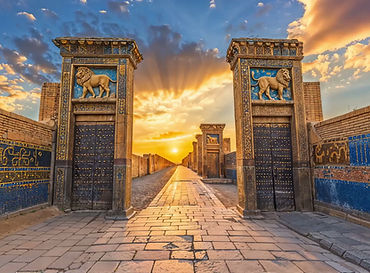
The Ishtar Gate (The Blue Wall)- One of the Seven Wonders-adjacent monuments of the ancient world. Blue glazed brick. Dragons. Bulls. Processional way. This is theology in architecture.
Greek Mythology
Greek Approximate Date Range: c. 1600 BCE - 600 CE
Roman Approximate Date Range: c. 750 BCE - 400 CE
Additional Resource Material
Greek mythology did not emerge as a single, unified religion. It developed
over centuries through oral tradition, local cults, regional deities, migration,
trade, and political consolidation across the Aegean world. Early myths helped
communities understand origin, power, inheritance, fate, war, sexuality,
agriculture, and death, long before they were written down.
The earliest surviving written sources reflect this oral foundation. Hesiod’s Theogony provides a genealogical account of divine origins and cosmic succession, while Works and Days frames human life as labor under divine and moral constraint. Homer’s epics, The Iliad and The Odyssey, portray gods as deeply anthropomorphic, emotionally volatile, and politically entangled with human affairs. Later tragedians such as Aeschylus, Sophocles, and Euripides used myth to explore guilt, inherited violence, hubris, and the limits of justice.
When Rome rose to dominance, it did not replace Greek mythology so much as absorb and repurpose it. Greek gods were renamed and woven into Roman civic religion, state power, and imperial destiny. While the myths remained largely Greek in structure, Roman theology emphasized law, duty, governance, and empire, transforming the gods into guarantors of social order and political legitimacy.
Greek mythology thus stands at the root of Western mythic imagination: not a doctrine of salvation, but a cosmic drama of power, consequence, and negotiation with fate.
Cosmology: The Shape of Reality
Greek cosmology begins not with a creator deity, but with Chaos: the primordial openness from which all things emerge. From Chaos arise foundational principles and beings, including Gaia (Terra) as Earth, Tartarus as the deep underworld, Eros (Cupid) as the binding force of desire, and later Uranus (Caelus) as Sky. Creation is relational and generative, not commanded into existence. Reality is layered rather than morally ranked. Mount Olympus serves as the political center of the gods, not a moral heaven. The mortal world exists under constant divine interference, while the Underworld, ruled by Hades (Pluto), is a place of inevitability rather than punishment. Death is not a moral verdict; it is a structural fact. Greek cosmology is governed by necessity and negotiation, not absolute justice. Even the gods are constrained by forces older than themselves.
The Divine Overthrow Cycle and Cosmic Order
A defining theological pattern in Greek myth is the cycle of overthrow. Power is inherited through violence and fear, not moral evolution. Uranus (Caelus) suppresses his children, hiding them within Gaia. Cronus (Saturn) overthrows Uranus, only to become paranoid that his own children will do the same. He devours them at birth. Zeus (Jupiter) survives through deception, grows in secret, and ultimately leads the Titanomachy, a cosmic war that defeats the Titans and establishes Olympian rule.
This victory is not portrayed as the end of chaos, but as a temporary stabilization. Zeus’s reign is constantly threatened by prophecy, monsters, giants, and rebellion. Order in Greek theology is contested and provisional, never final.
The Titans & Primordial Powers (Pre-Olympian Order)
Before the Olympians ruled, the cosmos was governed by primordial forces and Titans — beings who are not merely gods with personalities, but cosmic principles given form. Where Olympians negotiate and govern, Titans embody.
The Titans emerge primarily through Gaia (Terra) and Uranus (Caelus), representing time, memory, light, law, ocean, prophecy, and boundaries. Their overthrow does not erase them; it represses and redistributes their power.
Cronus (Saturn)- Titan of time, harvest, and devouring inevitability. Cronus overthrows Uranus, then consumes his children to prevent prophecy from undoing him. His reign reflects time as destructive preservation: everything is sustained by being consumed. His defeat by Zeus does not end time — it merely places it beneath Olympian order.
Rhea- Titaness of fertility and motherhood. Rhea preserves the future by deceiving Cronus and saving Zeus. She represents generativity resisting annihilation.
Oceanus & Tethys- Embodiments of the world-encircling waters. They are less personified than elemental, representing the boundary between the known and unknown.
Hyperion, Theia, Coeus, Phoebe- Titans associated with light, sight, intellect, and prophecy. Their power is largely inherited by later gods (Helios, Selene, Leto, Apollo, Artemis), demonstrating that Olympian clarity is borrowed, not original.
Hecate (Trivia)- Hecate is a Titaness who survives the Titanomachy with her authority intact — a theological anomaly.
She governs crossroads, thresholds, Witchcraft, liminal space, the night, ghosts, and transitions. Zeus explicitly honors her power, granting her influence over earth, sea, sky, and underworld. Hecate bridges Titanic depth and Olympian order, making her essential for understanding later magical, chthonic, and witchcraft traditions. She is not “dark” — she is boundary intelligence.
The Olympian Gods
Zeus (Jupiter)- King of the gods, ruler of thunder, law, and kingship. Zeus establishes cosmic order but maintains it through constant assertion of authority. His many liaisons produce gods and heroes while also generating endless conflict. Zeus embodies sovereignty that is stabilizing yet ethically compromised, ruling through power rather than moral purity.
Hera (Juno)- Goddess of marriage and queenship. Hera’s myths reflect the tension of institutional power bound to betrayal. Her vengeance toward Zeus’s lovers and children illustrates how systems protect themselves when consent is absent.
Poseidon (Neptune)- God of the sea, earthquakes, and horses. Poseidon represents nature’s volatility and refusal to submit. His myths center on rivalry, punishment, and the uncontrollable force of the ocean.
Demeter (Ceres)- Goddess of agriculture and life-sustaining cycles. Her grief over Persephone’s abduction halts the world’s fertility, forcing divine negotiation. Demeter’s theology centers grief as a cosmic force.
Athena (Minerva)- Goddess of wisdom, strategy, and civic order. Born from Zeus’s head, Athena represents intelligence channeled into law, craft, and statehood. She guides heroes and founds cities, embodying disciplined power.
Apollo (Apollo)- God of prophecy, medicine, music, and plague. Apollo’s clarity is double-edged: prophecy reveals truth but often brings suffering. He represents civilization’s light and cruelty intertwined.
Artemis (Diana)- Goddess of the wild, hunting, and sovereignty. Artemis fiercely defends boundaries and punishes violation. She represents nature’s autonomy and the sacredness of consent.
Ares (Mars)- God of war as bloodshed and rage. Feared but rarely respected, Ares embodies war stripped of meaning or strategy.
Aphrodite (Venus)- Goddess of love, beauty, and desire. Aphrodite’s power destabilizes alliances and ignites wars. Desire is divine, and therefore dangerous.
Hephaestus (Vulcan)- God of fire and craft. Rejected and wounded, Hephaestus forges the gods’ greatest tools. He embodies creation born of pain.
Hermes (Mercury)- Messenger, trickster, guide of souls. Hermes governs transitions, boundaries, commerce, and communication. Movement itself is sacred through him.
Hestia (Vesta)- Goddess of the hearth and domestic stability. Quiet but foundational, Hestia represents the unseen center that allows civilization to exist.
Dionysus (Bacchus)- God of ecstasy, wine, and divine madness. Dionysus dissolves rigid identity and exposes repression. His arrival often brings upheaval, revealing what society refuses to face.
Heroes & Demigods
Heroes occupy the space between gods and mortals. Many are demigods, bearing divine ancestry and human limitation.
Heracles (Hercules)- Son of Zeus and a mortal woman, Heracles embodies strength burdened by rage. Driven mad by Hera, he kills his family and must atone through the Twelve Labors, facing monsters, chaos, and impossible tasks. His arc is redemption through endurance. After death, he is granted immortality.
Perseus- Demigod son of Zeus, Perseus slays Medusa, rescues Andromeda, and defeats the sea monster. His story emphasizes cleverness, divine aid, and the danger of inherited prophecy.
Theseus- Hero of Athens who slays the Minotaur in the Labyrinth. His arc explores political unification and the cost of leadership, including betrayal and tragic forgetfulness.
Achilles- Greatest warrior of the Trojan War, nearly invincible except for his heel. His story centers on rage, honor, and the cost of pride. Achilles chooses glory over long life.
Odysseus (Ulysses)- Hero of endurance and cunning. His long return home tests identity, loyalty, and humility. Odysseus survives not through strength, but adaptability.
Jason- Leader of the Argonauts in the quest for the Golden Fleece. His arc highlights ambition, betrayal, and the cost of using others’ power, particularly that of Medea.
Atalanta- A rare female hero, swift and autonomous. Her story challenges gender norms and explores autonomy versus social expectation.
Monsters, Hybrids, and Boundary Beings
Greek monsters are not random enemies. They arise from theological consequences, not accidents.
Medusa (Gorgon)- Medusa is originally a mortal woman. After being assaulted by Poseidon in Athena’s temple, she is transformed into a monster whose gaze turns others to stone. This is not punishment for Medusa’s actions, but a reflection of how power protects itself.
Medusa becomes:
-
A figure of violated sovereignty
-
A living boundary
-
A warning against unchecked divine power
When Perseus beheads her, Athena places Medusa’s head on her shield — not as erasure, but as appropriated power. Medusa’s story exposes how systems convert trauma into weaponry.
The Minotaur- The Minotaur is born from Pasiphaë’s violation, itself a consequence of Poseidon punishing King Minos. The creature is hidden in the Labyrinth, a structure designed to conceal shame rather than resolve it.
The Minotaur represents:
-
Suppressed violence
-
Colonial tribute (Athens sacrifices youths)
-
The cost of burying truth
Theseus slays the Minotaur not merely as a hero, but as a political act: dismantling a system built on secrecy and sacrifice.
The Kraken / Cetus- In Greek myth, the sea monster Cetus (later conflated with the Kraken) is sent as punishment for royal arrogance. Andromeda is offered as a sacrifice to appease divine wrath.
When Perseus defeats the monster, the act represents:
-
Liberation from appeasement theology
-
Heroic intervention against inherited punishment
-
Transition from ritual sacrifice to ethical confrontation
Other Notable Monsters
-
Hydra: Regenerative violence; trauma multiplies when cut without strategy
-
Cerberus: Guardian of the boundary between life and death
-
Chimera: Hybrid instability; nature refusing categorization
-
Scylla & Charybdis: No-win choices; survival through navigation, not victory
Sacred Beasts & Mythic Creatures (Beyond Monsters)
Not all non-human figures in Greek mythology are monsters. Some are sacred intermediaries: beings born of trauma, divinity, or liminal crossing, who serve as bridges between realms.
Pegasus- Pegasus is born from Medusa’s blood when Perseus beheads her. This origin matters deeply: from an act of violence and violation emerges a being of beauty, flight, and transcendence. Pegasus embodies the paradox at the heart of Greek theology — sublimity does not arise from purity, but from transformation.
Pegasus becomes associated with:
-
The sky and divine ascent
-
Sacred springs and inspiration
-
The elevation of the heroic beyond brute force
He is later tamed by Bellerophon, who attempts to ride Pegasus to Olympus itself. This act of hubris fails. Pegasus throws Bellerophon back to earth, while Pegasus ascends alone. The myth is clear: divine elevation cannot be conquered, only approached with humility.
Pegasus thus functions as a living boundary between mortal aspiration and divine realm.
he Amazons: Sovereignty Outside the Polis. The Amazons are not monsters. They are not gods. They are a counter-civilization. In Greek mythology, the Amazons are a society of warrior women living beyond the boundaries of the Greek polis. They govern themselves, train in warfare, and reject patriarchal marriage structures. Their very existence challenges Greek assumptions about gender, power, and civilization.
Theologically and culturally, the Amazons represent:
-
Female sovereignty outside male governance
-
The fear and fascination of non-patriarchal power
-
A mirror held up to Greek society’s own constraints
They appear repeatedly at critical mythic moments:
-
Heracles confronts the Amazons during one of his labors, where diplomacy, betrayal, and violence intertwine.
-
Theseus encounters the Amazons in stories that culminate in conflict between Athens and Amazon society, often framed as a clash between order and autonomy.
-
During the Trojan War, the Amazon queen Penthesilea fights alongside Troy. Her duel with Achilles ends in tragedy when Achilles kills her and only then recognizes her humanity and beauty. This moment exposes the cost of defining the “other” only through conquest.
The Amazons are not defeated because they are evil. They are defeated because Greek myth cannot allow an enduring alternative social order to persist.
Major Myth Cycles
The Titanomachy- The war between Olympians and Titans establishes the current cosmic order. It is a theological statement that power is seized, not bestowed.
The Gigantomachy- A second existential threat in which giants challenge Olympian rule. The gods prevail only through cooperation with mortals, reinforcing shared responsibility for order.
The Persephone Cycle- Persephone’s descent and partial return explain the seasons and reveal grief as a force capable of reshaping reality. Mirrors of Sophia and Inanna's decent.
The Twelve Labors of Heracles- Atonement through ordeal. Each labor confronts chaos, mortality, and fear. Civilization advances by confronting the monstrous.
The Clash of the Titans (Perseus Cycle)- Perseus’s story ties prophecy, divine tools, and heroic restraint together, illustrating how fate can be navigated but not escaped.
The Trojan War- Sparked by divine rivalry and human pride, the Trojan War demonstrates how gods amplify human conflict. Its end through deception shows that strength alone does not determine fate.
The Odyssey- A theology of survival and return. Odysseus’s journey reveals identity as something forged through loss, temptation, and restraint.
The Underworld and Afterlife
The Underworld is governed by Hades (Pluto) and Persephone (Proserpina). Souls are judged by Minos, Rhadamanthus, and Aeacus, then sent to Asphodel, Elysium, or Tartarus. These realms reflect condition, not moral absolution.
Roman Adaptation and Political Theology
Rome retained Greek myths but reframed them to support empire, law, and civic duty. Gods became patrons of state order rather than cosmic drama. Myth became political theology.
Zoroastrianism
Astrology is one of humanity’s oldest symbolic systems for understanding time, meaning, and relationship between the heavens and life on Earth. At its core, astrology does not claim that planets cause events, but that celestial cycles correlate with earthly patterns, psychological states, and collective movements. Across cultures, astrology functioned as a cosmic calendar, a tool for timing, orientation, and meaning-making long before modern science separated astronomy from symbolism. Astrology emerged independently in multiple ancient civilizations, often intertwined with religion, governance, agriculture, and medicine. Rather than a single origin point, it represents a convergent human response to observing patterned motion in the sky and relating it to life below.

Resources
Avesta – complete sacred texts (public domain translations)
Early Origins and Ancient Cultures
Sumerians (c. 3000–2000 BCE)
The earliest recorded astrological practices appear in ancient Sumer and Mesopotamia. The Sumerians tracked planetary movements, eclipses, and lunar cycles, associating them with omens relevant to kingship, weather, and social stability. This form of astrology was collective and political rather than personal, aimed at interpreting the fate of cities and rulers.
Babylonian Astrology (c. 1800–500 BCE)
Babylonian scholars systematized astrology into a formal divinatory discipline. They developed zodiacal constellations, planetary omens, and ephemerides. This tradition laid the groundwork for horoscopic astrology by correlating planetary positions with specific times, though early charts were still focused on rulers and states rather than individuals.
Persian and Zoroastrian Influence
Zoroastrianism (c. 1500–600 BCE)
In ancient Persia, astrology merged with Zoroastrian cosmology, which emphasized cosmic order, moral dualism, and the struggle between truth and deception. The heavens were seen as an expression of divine order, and planetary cycles reflected ethical and temporal dynamics.
The Magi
The Magi, priest-astronomers of Persia, were highly trained in astrology and celestial observation. In later Judeo-Christian tradition, they appear in the story of Christ’s birth as interpreters of a star or celestial sign. Historically, this reflects astrology’s role as a respected scholarly discipline capable of interpreting world-changing cycles, not superstition.
Egyptian and Hellenistic Synthesis
Ancient Egypt (c. 2000–300 BCE)
Egyptian astrology emphasized decans (36 star groups) and solar cycles, closely tied to agriculture, ritual timing, and the afterlife. Egyptian thought contributed the concept of the soul’s journey and the symbolic mapping of heavens onto the human body.
Hellenistic Astrology (c. 300 BCE–600 CE)
After Alexander the Great, Greek, Egyptian, and Babylonian systems merged into what became Hellenistic astrology. This period produced:
-
The twelve-sign zodiac as we know it
-
Planetary rulerships
-
Houses
-
Natal (birth chart) astrology
This era reframed astrology as a personal, psychological, and philosophical system, not merely an omen-based one. Fate was discussed alongside choice, ethics, and character.
Jyotish / Vedic Astrology (c. 1500 BCE–present)
In India, astrology developed alongside Vedic philosophy and karma theory. Jyotish emphasizes:
-
Lunar cycles
-
Nakshatras (lunar mansions)
-
Karmic timing and dharma
Rather than personality alone, Vedic astrology focuses on soul development, timing, and life lessons, and remains a living, practiced tradition today.
Medieval, Islamic, and European Transmission
Islamic Golden Age (c. 800–1300 CE)
Islamic scholars preserved and expanded Greek astrological texts, refining mathematical astronomy and astrological techniques. Astrology was used in medicine, architecture, and governance.
Medieval & Renaissance Europe
Astrology was taught in universities alongside medicine and astronomy. Figures like Kepler and Galileo practiced astrology, though tensions grew as mechanistic science rose.
Modern Astrology
Post-Enlightenment to Present
Astrology declined institutionally but survived culturally. In the 20th century, it re-emerged in psychological, archetypal, and humanistic forms, emphasizing self-understanding over fate.
Modern astrology now includes:
-
Psychological astrology
-
Archetypal astrology
-
Evolutionary astrology
-
Mundane (world) astrology
What Astrology Is and Is Not
Astrology is:
-
A symbolic timing system
-
A language of cycles and archetypes
-
A reflective, interpretive practice
Astrology is not:
-
Deterministic fate control
-
Predictive certainty
-
A replacement for agency or ethics
At its healthiest, astrology supports awareness, consent, and choice, offering context rather than command.
Egyptian Mythology
Approximate Date Range:
c. 3100 BCE (Early Dynastic) – late antiquity
(temple tradition persists intothe 6th century CE)
Resources
UCLA Encyclopedia of Egyptology
British Museum Collection: Book of the Dead of Anibus
Ancient Egyptian religion was not built around “belief” the way many later systems are. It was an operating system for reality: how the cosmos stays coherent, how the Nile returns, how kingship stabilizes order, how the dead become effective ancestors, and how human life stays in rhythm with the divine. A key idea is Ma’at, the principle of truth, balance, harmony, and right order. Ma’at is both cosmic law and a lived ethic. When Ma’at holds, the world is fertile, the seasons return, society is stable, and the gods receive what sustains them. When Ma’at collapses, chaos floods in. Egyptian religion is also famously plural. Different cities emphasized different gods and creation stories. These were not treated as mutually exclusive so much as different “angles of the sacred,” layered on top of each other across time.
Timeline Highlights
-
Early Dynastic to Old Kingdom (c. 3100–2181 BCE): Royal mortuary religion intensifies; divine kingship formalizes; Pyramid-building era.
-
Old Kingdom (c. 2686–2181 BCE): Pyramid Texts emerge as elite funerary inscriptions.
-
Middle Kingdom (c. 2055–1650 BCE): Coffin Texts expand funerary knowledge beyond kings.
-
New Kingdom (c. 1550–1070 BCE): “Book of the Dead” (Book of Coming Forth by Day) flourishes on papyri; Osiris afterlife theology becomes culturally central.
-
Late Period to Ptolemaic (c. 664–30 BCE): Temple theology becomes extremely sophisticated; Isis cult expands.
-
Roman period into late antiquity: Philae remains a stronghold of traditional worship; the last known hieroglyphic inscription is dated to 394 CE.
Textual Development
Egypt has no single scripture. Its sacred corpus is a braided river:
-
Pyramid Texts (Old Kingdom): earliest royal ascent spells and afterlife formulas.
-
Coffin Texts (Middle Kingdom): expansions and democratization of afterlife guidance.
-
Book of the Dead (New Kingdom and later): a flexible collection of spells and vignettes for navigating the Duat and achieving blessed afterlife.
-
Later temple inscriptions, hymns, and mythic cycles (especially in Ptolemaic temples) deepen cosmology and divine roles.
Cosmology
Egyptian cosmology is fundamentally relational and maintained: the gods uphold creation, humans uphold the gods through offerings and right living, and the king (pharaoh) is the ritual hinge who “feeds” Ma’at into the world. Before creation is Nun, the infinite watery abyss. Creation begins when a first “land” or first “god” arises from Nun, initiating order.
Egypt preserves multiple creation theologies, each emphasizing different divine “first principles”:
1) Heliopolitan Creation (Atum and the Ennead)
-
Atum arises and generates the first pair: Shu (air) and Tefnut (moisture).
-
Shu and Tefnut generate Geb (earth) and Nut (sky).
-
Geb and Nut generate Osiris, Isis, Set, Nephthys.
This builds a complete cosmic family: sky, earth, fertile order, protective magic, desert-chaos, and liminal boundary.
2) Memphite Creation (Ptah as mind and craft)
-
Ptah creates through thought and speech (the “architect” model): reality as designed order, expressed into being.
This theology resonates with later philosophical ideas of logos, divine speech, and world-as-artifact.
3) Hermopolitan Creation (Ogdoad and the first emergence)
-
The earliest conditions are paired forces (darkness, hiddenness, fluidity, infinity).
From their interaction arises the first light and the ordered world.
Egypt doesn’t force you to choose. It lets multiple truths co-exist: creation as emergence, creation as design, creation as genealogical unfolding.
Ma’at and Isfet
-
Ma’at is order, truth, harmony, rightful proportion.
-
Isfet is disorder, injustice, chaos, distortion.
Every day is a negotiation between Ma’at and Isfet. That’s why ritual matters. Not as superstition, but as cosmic maintenance.
The Solar Cycle
The sun is not merely an object in the sky. It is a daily drama of survival and renewal.
-
By day, the sun travels across the sky (often as Ra or a related solar form).
-
By night, the sun travels through the Duat (underworld), facing threats like Apep/Apophis, the serpent of uncreation.
This nightly journey models the idea that even cosmic order must pass through darkness and return renewed.
The Human Person
Egyptian personhood is composite. Rather than one “soul,” you get multiple interlocking components (names vary by period and source), commonly including:
-
Ka: vital essence or life-force (what offerings nourish)
-
Ba: mobile personality manifestation, often depicted as a human-headed bird
-
Akh: the transfigured, effective spirit state achieved after successful rites and judgment
-
Ren (Name) and Sheut (Shadow): identity and presence that must be protected
This is why names, images, tombs, and offerings matter. They stabilize continuity between worlds.
The Afterlife: Duat and the Field of Reeds
The afterlife is not “heaven.” It’s a landscape of trials, transformations, and destination-states.
-
Duat: the underworld terrain traversed after death, filled with gates, guardians, regions of danger, and opportunities for transformation.
-
Aaru (Field of Reeds): an idealized “Egypt made perfect,” where the justified live in abundance, continuity, and peace. The Book of the Dead depicts this as a real destination for those who pass judgment.
Judgment: The Weighing of the Heart
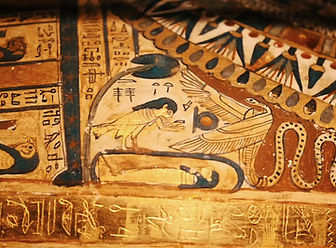
One of the most iconic rituals is the judgment scene preserved in Book of the Dead imagery, including the Papyrus of Ani.
-
The deceased’s heart is weighed against the feather of Ma’at (truth/order).
-
Thoth records the verdict.
-
If found unworthy, the heart may be consumed by Ammit (a devourer figure), resulting in a feared second death or obliteration.
-
If found worthy, the person proceeds toward blessed afterlife.
This is not “sin” in the later Western sense. It’s alignment. Your inner weight must match cosmic balance.
Major Characters and Archetypes
A pantheon built like a living ecosystem
Below is a rich but readable roster, grouped by function.
Cosmic Foundations
-
Nun: primordial waters, pre-creation infinity.
-
Atum: self-arising creator, source of the Ennead.
-
Shu: air, space, the force that separates sky and earth.
-
Tefnut: moisture, balance, heat and humidity dynamics of life.
-
Geb: earth, grounding, generativity.
-
Nut: sky, starfield, cosmic womb swallowing and birthing the sun.
Order, Truth, Kingship
-
Ma’at: truth/order itself, both goddess and principle.
-
Pharaoh: not a “character” but a cosmological office, the human axis tasked with feeding Ma’at into the world.
Solar and Cosmic Power
-
Ra: solar sovereign, daily renewal and cosmic authority.
-
Amun: hiddenness, the invisible power behind power; later fused with Ra as Amun-Ra.
-
Apep (Apophis): serpent of chaos that threatens the solar barque each night.
The Osirian Cycle (Death, Magic, Legitimate Rule)
-
Osiris: murdered king who becomes lord of the dead, symbol of regeneration and continuity.
-
Isis: master of protective magic and restoration; wife of Osiris, mother of Horus, archetype of devotion and spiritual technology.
-
Horus: rightful heir, falcon power, kingship restored through justice and struggle.
-
Set (Seth): desert storm, disruption, necessary wild force, and also the great antagonist in the Osiris myth.
-
Nephthys: liminal sister, protector at thresholds, mourning and guarding the dead.
Deathwork and Passage
-
Anubis: embalming guardian and guide; oversees the transition and the weighing scene.
-
Thoth: sacred intellect, writing, measurement, lunar wisdom; records judgment and stabilizes cosmic law.
Love, Joy, Beauty, and Fierce Protection
-
Hathor: joy, music, love, intoxication, mothering sweetness and cosmic delight.
-
Sekhmet: lioness heat, plague and healing, rage as purification, the fierce defender of Ra.
-
Bastet: protective domestic grace, cat guardianship, joy with claws.
Waters, Fertility, and Threshold Forces
-
Sobek: crocodile power, Nile fertility, raw life force.
-
Khnum: shaper of bodies on the potter’s wheel, life-formation.
-
Taweret: fierce maternal protection, childbirth guardian.
-
Bes: protector of households, children, and liminal vulnerability.
This pantheon behaves less like a “cast list” and more like a map of reality: Nile, desert, death, kingship, fertility, protection, knowledge, desire, and the daily war against uncreation.
Core Narrative Summary
The myth-cycles Egypt tells about reality Egyptian myth is not one story. It’s a set of interlocking cycles that explain how order survives.
1) Creation: order rises from the abyss
In the beginning is Nun, the limitless waters. From Nun, a first principle arises (Atum, Ptah, or the Hermopolitan forces depending on the theology). The world is stabilized through separation: air between sky and earth, moisture in balance, land emerging, light becoming reliable. Creation is not a one-time event. It is a pattern. Each sunrise is a re-creation. Each king must re-enact Ma’at.
2) The solar journey: the sun must win every night
By day, the sun travels in glory. By night, it descends into the Duat where chaos gathers shape. Apep rises to swallow the light, to undo creation itself. The sun’s survival is not guaranteed. It is fought for, ritually reinforced, magically defended, and cosmically repeated. This is why Egyptian spirituality feels so “procedural” to modern eyes. It treats reality as something maintained through correct relationship, correct action, and correct alignment.
3) The Osiris myth: how death becomes continuity
Osiris rules as a civilizing king, embodying fertility and rightful order. His brother Set murders him, dismembers him, and attempts to erase his continuity. Isis searches, gathers, restores. Through her magic and devotion, Osiris is reconstituted enough to conceive Horus, and Osiris becomes lord of the underworld, the archetype of regeneration through death.
Horus grows into the rightful heir, and the conflict between Horus and Set becomes the mythic template for contested legitimacy: order versus disruption, inheritance versus seizure, cultivated land versus desert storm.
This myth does two powerful things at once:
-
It explains why death exists and why it is not the end.
-
It frames kingship as a cosmic duty: the living ruler must embody Horus while honoring Osiris.
4) Judgment and the afterlife: alignment becomes destiny
After death, the person enters the Duat, facing gates, guardians, dangers, and tests. The Book of the Dead provides spells, names, and forms of knowledge to navigate this terrain.
At the heart of this journey is the Weighing of the Heart, where the deceased’s heart is balanced against Ma’at’s feather.
The question is not “Did you believe the right thing?” It’s “Does your inner weight match truth and balance?”
If yes, the person proceeds into blessed life, often envisioned as the Field of Reeds: abundance, continuity, peace, and meaningful existence.
If no, the person risks devouring by Ammit and the dreaded second death.
So the Egyptian story is ultimately this: the cosmos can be trusted, but only if it is fed with Ma’at.
Keeping the mystery alive:
Recent muon tomography has confirmed the presence of previously unknown large voids and corridors within and beneath the Great Pyramid complex. These spaces are significant in scale and intentional in form, challenging earlier assumptions about pyramid design. While their precise function remains undetermined, their existence alone suggests that the internal and subterranean architecture of Giza is more complex than previously acknowledged. Speculation regarding the purpose and extent of these spaces ranges widely, from structural engineering hypotheses to ritual or symbolic interpretations. At present, evidence supports the existence of substantial unknown architecture, while interpretations remain open.
c. 500 BCE – 1200 CE
Worldview & Theological Orientation
Norse mythology presents a world governed not by moral absolutes or divine
perfection, but by inevitability, struggle, and choice within constraint. Fate,
known as wyrd, exists prior to the gods themselves. Even Odin, chief of the
Æsir, is bound by it. The cosmos is not designed for eternal harmony; it is
designed for cycles of emergence, decay, destruction, and renewal. Meaning
is not derived from obedience or salvation, but from how one acts when the
outcome is already known. Courage, honor, loyalty, and sacrifice matter
precisely because they do not guarantee survival. This worldview produces a
tragic but lucid theology: the gods strive, build, love, and sacrifice fully aware
that their efforts will ultimately fail. What matters is not victory, but
participation.
Resources
The Poetic Edda (Free Translation – Sacred Texts)
The Prose Edda (Snorri Sturluson – Sacred Texts)
The Viking World (National Museum of Denmark – English)
Christianization of Scandinavia & the End of the Old Gods (BBC History)
Cosmology: The Structure of Reality
Yggdrasil, the World Tree
At the center of Norse cosmology stands Yggdrasil, the immense ash tree that binds all existence. It is not merely a backdrop for the cosmos; it is the cosmos, an axis mundi connecting gods, humans, spirits, and the dead. Yggdrasil is alive, conscious, and perpetually under strain. Its roots extend into multiple realms, drawing nourishment from sacred wells, including the Well of Urd, where fate itself is woven.
The tree is constantly threatened. The dragon Níðhöggr gnaws at its roots, embodying entropy and decay, while stags strip its leaves above. Between its branches runs Ratatoskr, the great squirrel, carrying insults and messages between eagle and dragon, symbolizing the circulation of tension, rumor, and conflict throughout existence. Disorder is not an accident; it is structural.
Yggdrasil is also a site of sacrifice and initiation. Odin hangs himself upon the tree for nine nights, pierced by his own spear, without food or water, sacrificing himself to himself in order to gain the knowledge of the runes. This act establishes a central Norse theme: wisdom is not granted, it is paid for. In some traditions, Baldr’s death is also ritually associated with the tree, reinforcing Yggdrasil as a place where knowledge, death, and transformation intersect.
The purpose of Yggdrasil is not to prevent collapse, but to hold the worlds together long enough for meaning to unfold.
The Nine Realms
The Nine Realms are not planets or moral tiers, but distinct modes of being, each with its own laws, inhabitants, and tensions.
-
Asgard is the realm of the Æsir gods, a fortified stronghold rather than a paradise. It is a place of councils, feasts, preparation, and looming dread, for the gods know Ragnarök will begin there.
-
Midgard, the human world, is fragile and contested, carved from the body of the primordial giant Ymir and encircled by Jörmungandr, the World Serpent. Humanity exists in a precarious balance between divine protection and cosmic threat.
-
Jötunheim is the realm of the Jötnar, often mistranslated as “giants,” but better understood as primordial forces of chaos, nature, and inevitability. The Jötnar are ancient, powerful, and essential; many gods descend from them.
-
Vanaheim is home to the Vanir gods, associated with fertility, land, wealth, and reciprocal prosperity. Its existence reminds us that not all power in the cosmos is martial or hierarchical.
-
Alfheim is the realm of the light elves, beings associated with beauty, vitality, and subtle influence, while Svartalfheim (or Nidavellir) is home to dwarves, master craftsmen who forge the gods’ most powerful tools, including Thor’s hammer and Odin’s spear.
-
Hel is the realm of the dead ruled by the goddess Hel. It is not a place of punishment, but of inevitability, where those who die of illness or old age reside. There is no moral judgment here, only continuation.
-
Muspelheim, the realm of fire, and Niflheim, the realm of ice and mist, are primordial forces whose interaction gave rise to creation itself. At Ragnarök, they return to consume the worlds.
Pantheons & Beings
The Æsir- The Æsir represent sovereignty, war, law, and cosmic order, but their stories are marked by loss and compromise.
-
Odin is not a benevolent father-god, but a relentless seeker of knowledge. He sacrifices his eye at Mímir’s Well for wisdom, hangs himself upon Yggdrasil for the runes, and bargains, deceives, and manipulates to delay an end he knows cannot be stopped. His arc is tragic: the more he knows, the clearer his doom becomes. At Ragnarök, he is devoured by Fenrir, the very force he tried to bind.
-
Thor, his son, embodies protection and strength rather than cunning. He is the defender of Midgard, endlessly battling Jötnar to keep chaos at bay. Yet even Thor cannot escape fate. At Ragnarök, he slays Jörmungandr, fulfilling his role as protector, but takes only nine steps before collapsing, poisoned by the serpent’s venom.
-
Frigg, Odin’s wife, knows the fate of all things but is powerless to change them. Her story centers on Baldr, her beloved son, whose death she tries desperately to prevent. She extracts oaths from all beings not to harm him, but overlooks mistletoe. Her knowledge becomes a curse rather than a shield.
-
Baldr, radiant and beloved, is killed through Loki’s deception when the blind god Höðr is tricked into striking him with mistletoe. Baldr’s death marks the point of no return. The gods attempt to retrieve him from Hel, but one refusal prevents his return. His absence poisons the future.
-
Tyr, god of law and honor, loses his hand binding Fenrir. His sacrifice is voluntary and final, embodying the Norse ethic that justice may require permanent loss.
The Vanir- The Vanir represent a different mode of power: fertility, land, prosperity, and magic.
-
The Æsir–Vanir War ends not in annihilation but exchange. Hostages are traded, and the pantheons merge, suggesting that no single expression of power is sufficient to sustain the cosmos.
-
Freyja, goddess of love, fertility, and seiðr magic, is one of the most complex figures in Norse mythology. She weeps tears of gold for her lost husband and claims half of the slain warriors for her hall, reminding us that death belongs as much to fertility as to war.
-
Freyr, her brother, is associated with peace and abundance. In a tragic act, he gives away his magical sword for love, knowing it will leave him defenseless at Ragnarök. His death is not a failure, but a consequence of choosing love over survival.
-
Njord, their father, governs sea, wealth, and travel, embodying the liminal space between land and water.
The Jötnar and Other Beings- The Jötnar are not villains, but cosmic necessities. Many gods descend from them, and their opposition drives the narrative forward.
-
Loki, himself of Jötnar lineage, is a liminal figure: trickster, companion, saboteur. His children embody forces the gods cannot control.
-
Fenrir grows too powerful to restrain.
-
Jörmungandr encircles the world, ensuring collapse is always near.
-
Hel, half-living and half-dead, rules the dead with cold inevitability.
-
When Loki is bound for his role in Baldr’s death, the venom dripping onto his face mirrors Odin’s sacrifice, but without redemption. At Ragnarök, Loki breaks free, leading the forces of destruction.
Core Myths & Story Cycles
Creation begins in Ginnungagap, the yawning void between fire and ice.
From this tension arises Ymir, the primordial being whose body becomes the material world after his slaying by Odin and his brothers. Violence is foundational, not aberrant. The gods build walls, establish order, and craft tools, but each victory contains the seed of future collapse. Loki’s tricks secure treasures, yet also unleash threats. Every binding foretells a breaking. The death of Baldr crystallizes this pattern. Despite all attempts to prevent it, fate asserts itself. The gods’ failure is not due to moral weakness, but to the structure of reality itself.
Ragnarök: Destruction and Renewal
Ragnarök unfolds through omens: endless winters, the breakdown of kinship, the freeing of bound monsters. When it comes, gods and giants clash, knowing the outcome. Odin falls to Fenrir. Thor kills the serpent and dies. Freyr is slain. Heimdall and Loki kill each other. The world burns and sinks beneath the sea. And then, quietly, it returns. A new world rises. Baldr returns. Survivors rebuild. Life continues. Ragnarök is not judgment. It is cosmic honesty.
History, Christianization, and Loss
Norse mythology survived primarily through oral tradition until the Christianization of Scandinavia. The Poetic Edda preserves older mythic poems, while the Prose Edda, written by Snorri Sturluson in Christian Iceland, systematizes the myths through a Christian lens. This preservation is both a gift and a distortion. Much was lost. Some gods are barely remembered. Others are reframed. What survives is fragmented, shaped by conquest and conversion.
The Viking Age saw Norse cosmology carried far beyond Scandinavia. Norse explorers reached Britain, Ireland, Iceland, Greenland, and North America. Their encounters reshaped European history, law, language, and governance. Over time, Norse lands were absorbed into Christian kingdoms, their theology replaced by linear salvation narratives.
Yet echoes remain: in language, myth, and cultural memory.
ans have faced impermanence with courage, clarity, and meaning.
Norse Mythology

Earth, Ancestors, and Cyclical Sacred Order
Approximate Date Range: Pre-Christian era – c. 10th–14th centuries (with survivals)
Geographic Region: Eastern Europe, Balkans, Baltic states (Slavic and Baltic peoples)
Resources
Encyclopaedia Britannica — Slavic Religion
Internet Archive — Slavic & Baltic Mythology Studies
Slavic and Baltic paganism refers to a family of related indigenous belief systems practiced across Eastern Europe prior to Christianization. These traditions were oral, land-based, and communal, with no single scripture, prophet, or centralized authority. They persisted longest in rural and forested regions, and many elements survived Christianization through folk customs, seasonal festivals, and local saints who replaced earlier deities in name only.
Core Worldview
A living, ensouled landscape. Slavic–Baltic cosmology is animistic and cyclical. Nature is alive, responsive, and relational.
Key assumptions:
-
The land itself is sacred
-
Ancestors remain present and influential
-
Time moves in cycles, not toward an apocalypse
-
Balance between forces matters more than moral absolutes
There is no concept of original sin, final judgment, or world-ending salvation.
Major Deities and Forces
While regional variations are significant, several figures recur across Slavic traditions:
-
Perun- Sky, thunder, order, oaths, protection. Often associated with the upper world and law.
-
Veles- Earth, waters, underworld, cattle, wealth, magic. A trickster and liminal figure.
-
Mokosh- Earth, fertility, women’s work, fate, and protection of the home.
Rather than a strict hierarchy, these deities represent interdependent forces: sky and earth, order and chaos, life and death.
Cosmology
Many Slavic traditions describe a three-part cosmos:
-
Upper world – sky, gods, thunder
-
Middle world – humans, forests, fields
-
Lower world – ancestors, spirits, roots, waters
These realms are connected by a world tree, often mirrored in sacred oaks. Movement between realms occurs through ritual, seasonal transitions, or death and rebirth cycles.
Ritual and Practice
Practices focused on agricultural cycles, solstices and equinoxes, ancestral veneration, fire and water rites, and offerings to household and land spirits. There were no priestly castes in the later sense. Ritual leadership was local and communal, often shared.
Baltic Paganism
Preservation through resistance
Baltic traditions (Lithuanian, Latvian) preserved pagan elements longer than most of Europe.
Common features:
-
Sacred groves
-
Solar and fire symbolism
-
Female deities tied to fate and weaving
-
Strong continuity into folklore
Modern Baltic neopagan movements draw heavily from these survivals.
Suppression and Survival
Christianization in Slavic regions was:
-
Often forced
-
Politically motivated
-
Followed by demonization of local gods
Despite this, many practices survived as:
-
Folk magic
-
Seasonal festivals
-
Christianized rituals with pagan roots
This makes Slavic–Baltic paganism one of Europe’s most resilient indigenous spiritual layers.
Why Slavic & Baltic Traditions Matter
These traditions offer:
-
A non-imperial European spirituality
-
Deep land and ancestor reverence
-
Feminine and masculine balance
-
Cyclical, non-apocalyptic worldview
They did not shape global institutions, but they preserved earth-honoring spirituality at Europe’s margins when centralized religion moved toward control and hierarchy.

Slavic Paganism
Celtic Paganism
Land, lineage, and the thin places
Approximate Date Range:
c. 1200 BCE – Early medieval period (with survivals into folklore and living tradition)
Resources
University College Cork – CELT (Corpus of Electronic Texts)
Sacred Texts – Celtic Mythology Collection
The British Library – Celtic Manuscripts & Mythic Context
Geographic Range:
Ireland, Scotland, Wales, Brittany, Gaul, Iberia, and parts of Central Europe
Celtic mythology is not a single unified system. It is a constellation of related traditions shaped by land, tribe, season, and oral transmission. Much of what survives comes through Christian-era scribes, meaning the myths arrive layered, reframed, and sometimes deliberately softened. Even so, the underlying worldview remains remarkably intact.
At its core, Celtic cosmology is:
-
Animistic and land-based
-
Cyclical rather than linear
-
Deeply relational between humans, ancestors, spirits, and gods
Power does not flow from heaven downward. It rises from the land itself.
Timeline Highlights
-
Bronze Age (c. 1200 BCE) – Proto-Celtic ritual landscapes, henges, burial mounds
-
Iron Age (c. 800 BCE – 100 CE) – Druids, tribal kingship, oral mythic cycles
-
Roman period – Syncretism with Roman gods; suppression in some regions
-
Early medieval era – Myths recorded in Ireland and Wales (Ulster Cycle, Mythological Cycle, Mabinogion)
-
Later folklore – Fae traditions, fairy faith, seasonal rites persist
Textual Development
Celtic myth survives primarily through:
-
Irish mythological cycles (written c. 8th–12th centuries)
-
Welsh texts such as the Mabinogion
-
Roman accounts (often hostile or incomplete)
-
Living folklore and ritual memory
There is no canon. Authority lives in continuity and resonance, not scripture.
Cosmology
A world layered, alive, and permeable. Celtic cosmology does not sharply divide sacred and mundane. Instead, reality is multi-layered, with boundaries that thin and thicken according to time, place, and condition.
The Threefold World
A common cosmological structure appears across Celtic regions:
-
The Upper World – sky, gods, inspiration, sovereignty
-
The Middle World – land of humans, animals, daily life
-
The Otherworld – realm of spirits, ancestors, gods, and the Sidhe
These are not stacked heavens. They interpenetrate.
The Otherworld
The Otherworld is not a realm of the dead alone. It is timeless or time-fluid, abundant, luminous, dangerous, and entered through mounds, lakes, forests, caves, or mist. It is often ruled or guarded by divine beings and the Sidhe (fair folk), who are not tiny sprites but powerful, ancestral, and ambiguous beings.
Thin Times and Thin Places
Certain moments and locations dissolve boundaries:
-
Samhain and Beltane (seasonal thresholds)
-
Stone circles, henges, fairy mounds, ancient trees
-
Liminal acts: birth, death, oath-making, kingship
At these thresholds, the worlds speak to each other.
Time and Fate- Time is cyclical, spiral, and seasonal. Fate is not fixed prophecy but patterned consequence. Choice matters, but so does alignment with land and lineage.
Major Characters & Archetypes
Sovereignty, War, and Fate
-
The Morrígan- Triple goddess of sovereignty, battle, prophecy, and land. Appears as crow, woman, or queen. She does not cause war; she reveals its truth. Embodies the land’s response to kingship.
The Tuatha Dé Danann (Divine Ancestors)
-
The Dagda- Great father, lord of abundance, magic, life and death. Carries a cauldron that never empties and a club that kills with one end and revives with the other.
-
Brigid- Goddess of poetry, healing, fire, and craft. Patron of smiths and seers. Later Christianized as Saint Brigid without losing her power.
-
Lugh- Master of all arts. Warrior, craftsman, king. Represents competence as sacred authority.
-
Nuada- King of the Tuatha Dé Danann. Loses and regains kingship through bodily wholeness, emphasizing the sacred link between ruler and physical integrity.
Heroes and Mortal-Divine Bridges
-
Cú Chulainn- Tragic warrior of the Ulster Cycle. Enters battle frenzy (ríastrad) that transforms him beyond human form. Embodies youthful ferocity and doom.
-
Fionn mac Cumhaill- Leader of the Fianna. Gains wisdom by tasting the Salmon of Knowledge. Combines warrior skill with poetic insight.
The Sidhe and Fae Folk
-
Sidhe- The Sidhe are not “fairies” in the modern sense. They are otherworld beings, often associated with ancient burial mounds, pre-Christian gods, or ancestral spirits. They reward respect and punish arrogance.
IV. Druids, Pagans, and Sacred Practice
Druids- Druids were priests, judges, poets, astronomers, and keepers of memory. They transmitted knowledge orally, often over decades of training. Writing sacred knowledge was discouraged, not from ignorance, but from reverence and protection.
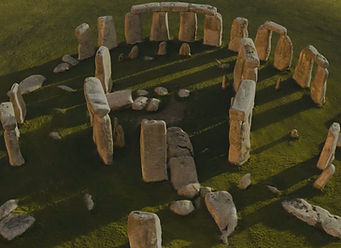
Circles, Henges, and Sacred Geometry
Stone circles and henges functioned as:
-
Ritual gathering points
-
Astronomical markers
-
Ancestral interfaces
They are not monuments to conquest but conversation points with land and sky.
Kingship and Sovereignty
A king did not rule by decree alone. He married the land symbolically. If he ruled unjustly, crops failed and order broke. Sovereignty goddesses withdrew favor.
Core Narrative Summary
The story Celtic mythology tells. The world is alive. Land remembers. Rivers listen. Stones witness. Humans are not masters but participants in a living web of relationship. The gods are not distant rulers. They are neighbors across the veil. Ancestors do not vanish; they remain near, watching how the land is treated. When balance holds, the Otherworld blesses the living. When arrogance rises, the Sidhe withdraw or retaliate. Heroes arise not to conquer evil, but to navigate fate, often paying a terrible price for crossing thresholds unprepared. Wisdom is won through ordeal. Kingship is earned through alignment, not blood alone. There is no final battle. No apocalypse. Only seasons, spirals, and returns. Death is not exile. It is a change of address.
Harmony, balance, and the living cosmos
Approximate Date Range: c. 2000 BCE – Present
Geographic Origins: Yellow River basin and greater East Asia
Resources
The Classic of Mountains and Seas (Shan Hai Jing)
Stanford Encyclopedia of Philosophy
Chinese mythology is not a single, closed canon. It is a layered mythic ecosystem shaped by oral tradition, court historiography, ritual practice, folk belief, philosophy, and later religious synthesis. Unlike many Western myth systems, Chinese mythology does not center on a dramatic fall, apocalypse, or final judgment. Its primary concern is balance, not salvation. Myth, history, philosophy, and cosmology blur together. Legendary emperors are treated as culture heroes rather than distant gods. Deities govern processes more than moral law. Humans are not fallen; they are participants in a cosmic pattern that must be tended. Chinese mythology eventually interweaves with Taoism, Confucianism, and Buddhism, but it predates all three and continues to inform them.
Timeline Highlights
-
Neolithic era (pre-2000 BCE) – Proto-myths, ancestor spirits, nature powers
-
Xia, Shang, Zhou periods – Mythic kings, Heaven (Tian), Mandate of Heaven concepts
-
Warring States period – Mythic material recorded alongside philosophy
-
Han dynasty – Systematization of cosmology, immortals, heavens
-
Later dynasties – Folk religion, Taoist mythology, Buddhist integration
-
Modern era – Myths persist in festivals, folklore, symbolism, and art
Textual Development
Chinese mythology survives through:
-
Historical chronicles (e.g., Shan Hai Jing – Classic of Mountains and Seas)
-
Philosophical texts (myth embedded, not separated)
-
Folk tales and ritual practice
-
Later Taoist compilations
There is no single “book of myth.” Myth is distributed, contextual, and alive.
Cosmology
A universe that unfolds rather than begins. Chinese cosmology does not insist on a singular creation event. Instead, it describes differentiation from undivided potential.
The Primordial State
Before heaven and earth, there is hundun: undifferentiated chaos. Not evil. Not disorder. Simply unformed potential.
From hundun arises polarity.
Yin and Yang
-
Yin: receptive, dark, moist, inward, gestational
-
Yang: active, bright, dry, outward, expressive
These are not opposites in conflict but complementary movements. Everything arises from their dynamic interplay.
The Pangu Myth
In one widely told creation story Pangu emerges from cosmic chaos. He separates heaven and earth, holding them apart as he grows. Upon his death, his body becomes the world. Breath becomes wind. Voice becomes thunder. Eyes become sun and moon. Blood becomes rivers. Bones become mountains. Creation is thus sacrificial and organic, not commanded.
Heaven (Tian)
Heaven is not a personal god. It is cosmic order itself. Tian governs moral resonance, not obedience. Rulers rule only while aligned with Heaven. When alignment fails, the Mandate of Heaven withdraws. This idea shapes politics, ethics, and myth simultaneously.
Multiple Realms
Chinese cosmology includes layered realms:
-
Heavenly realms governed by celestial bureaucracy
-
Earthly realm where humans participate in cosmic balance
-
Underworld (Diyu) where spirits are judged and transformed, not eternally damned
These realms are porous, connected through ritual, dreams, and ancestral veneration.
Major Characters & Archetypes
Creation and Cosmic Order
-
Pangu- The primordial giant whose body becomes the cosmos. Symbol of differentiation, sacrifice, and embodied creation.
-
Nüwa- Goddess of creation and repair. Forms humans from clay and later repairs the sky after catastrophe. Represents care, restoration, and maternal cosmology, not conquest.
-
Fuxi- Culture hero associated with divination, the trigrams, and early civilization. Often paired with Nüwa. Bringer of pattern-recognition and cosmic literacy.
Celestial Authority
-
The Jade Emperor- Ruler of Heaven’s bureaucracy. Not omnipotent. Oversees order, assigns roles, and maintains celestial administration. Reflects Chinese governance mirrored in myth.
-
The Queen Mother of the West (Xi Wangmu)- Ancient goddess of immortality, mountains, and mystery. Keeper of the peaches of eternal life. A powerful, liminal feminine figure older than later patriarchal structures.
Nature, Power, and Transformation
Dragons- Central mythic beings. Controllers of water, rain, rivers, and weather. Symbols of power, wisdom, and imperial authority. Dragons are beneficent forces, not monsters.
The Four Symbols
-
Azure Dragon (East, Spring)
-
White Tiger (West, Autumn)
-
Vermilion Bird (South, Summer)
-
Black Tortoise (North, Winter)
They structure space, time, seasons, and cosmic orientation.
Immortals and Culture Heroes
The Eight Immortals
A diverse group of humans who attain immortality through different means: discipline, luck, wisdom, humor, or endurance. They mock hierarchy and show that transcendence is plural.
Yu the Great
Hero who tames the great flood not by force, but by working with water’s nature. Establishes civilization through harmony rather than domination.
Core Narrative Summary
In the beginning, there is not sin, nor command, nor judgment. There is undifferentiated potential. From this potential, heaven and earth gradually separate. Order emerges through balance, not decree. The world is not fallen. It is unfinished, requiring care. Human beings are shaped by divine hands, but they are not helpless. They are collaborators in maintaining harmony between heaven, earth, and ancestors. When catastrophe occurs, it is not framed as punishment. It is imbalance. Floods, broken skies, and dynastic collapse are signs that resonance has failed.
The solution is never blind obedience. It is realignment:
-
Wise rulers rule by virtue.
-
Immortals emerge through cultivation, not favor.
-
The cosmos is repaired, not reset.
Even heaven operates like a living system, staffed by officials who can err, be replaced, or rebalanced. There is no final ending. No apocalypse. Only cycles of harmony, rupture, and restoration.
Chinese Mythology

Buddhism
Liberation through insight, not obedience
Approximate Date Range: c. 5th century BCE – Present
Geographic Origins: Northern India (present-day Nepal and Bihar), later
spreading throughout South Asia, East Asia, Southeast Asia, and Tibet.
Buddhism emerged in a period of intense philosophical experimentation in
India, alongside early Hindu schools, Jainism, and other śramaṇa
(renunciate) traditions. It was not founded as a religion of worship, but as
a path of liberation from suffering based on direct observation of mind,
body, and reality. At its core, Buddhism rejects a creator god, eternal souls,
and salvation through belief or sacrifice. Instead, it centers experience, insight, and ethical action.
Resources
Access to Insight – Pāli Canon & Early Teachings
84000: Translating the Words of the Buddha (Mahayana & Vajrayana texts)
Stanford Encyclopedia of Philosophy – Buddhism
Timeline Highlights
-
c. 563–483 BCE – Life of Siddhartha Gautama (the Buddha)
-
c. 400–300 BCE – Oral transmission of teachings by monastic communities
-
c. 250 BCE – Emperor Ashoka patronizes Buddhism, aiding its spread
-
1st century BCE – 1st century CE – First written Buddhist canons compiled
-
c. 1st–5th centuries CE – Emergence of Mahayana Buddhism
-
c. 6th–8th centuries CE – Development of Vajrayana / Tantric Buddhism
-
Modern era – Global spread, secular interpretations, reform movements
Textual Development
-
Teachings were transmitted orally for centuries before being written down.
-
No single “Bible” exists; instead, multiple canons developed regionally.
-
Major collections include:
-
Pāli Canon (Tipiṭaka) – earliest surviving corpus
-
Mahayana sutras – later philosophical expansions
-
Tantric texts – symbolic and esoteric teachings
-
Texts were preserved by communities rather than imposed by centralized authority, resulting in diversity rather than orthodoxy.
Cosmology
A conditioned universe structured by mind, action, and consequence, Buddhist cosmology describes a vast, multi-layered universe that operates without a creator, governed instead by dependent origination: all phenomena arise due to causes and conditions, and cease when those conditions dissolve. Reality is not divided into “physical” and “spiritual” realms in a moral sense, but into states of existence shaped by consciousness and karma. These realms are neither eternal nor symbolic abstractions alone. They function as both cosmic locations in traditional cosmology and psychological-experiential states accessible moment to moment.
The Six Primary Realms of Existence
1. Hell Realms (Naraka)
These are realms of extreme suffering, characterized by intense pain, fear, and despair. Beings here experience the fruition of highly destructive karma, such as violence or cruelty. Hell realms are not eternal; when the karmic momentum that produced rebirth there is exhausted, rebirth occurs elsewhere. These realms reflect states of overwhelming torment, rage, or terror.
2. Hungry Ghost Realm (Preta)
Beings in this realm are dominated by insatiable craving and chronic dissatisfaction. They are often depicted with enormous stomachs and tiny mouths, symbolizing endless hunger that cannot be satisfied. Psychologically, this realm corresponds to addiction, obsession, and compulsive desire. Suffering here arises from grasping without fulfillment.
3. Animal Realm
This realm is marked by instinct, fear, and survival-based consciousness. Beings here live primarily through impulse, habit, and avoidance of pain. While not defined by overt suffering like hell realms, ignorance dominates. Symbolically, it reflects states of passivity, denial, or unexamined routine existence.
4. Human Realm
Considered the most favorable realm for awakening, the human realm uniquely balances pleasure and suffering. This balance creates the motivation and capacity for insight. Humans possess sufficient intelligence, ethical agency, and access to teachings to pursue liberation. However, the same realm also allows for distraction, attachment, and misuse of freedom.
5. Heavenly Realms (Deva)
These realms are characterized by pleasure, longevity, and subtle joy. Beings here enjoy refined experiences and minimal suffering, but often lack motivation to seek liberation due to comfort and complacency. When the positive karma sustaining this rebirth is exhausted, rebirth occurs elsewhere. Even the gods are impermanent.
6. Demi-God / Jealous God Realm (Asura)
Beings here experience power, ambition, and conflict, often marked by envy toward the gods. This realm reflects competitive striving, pride, and aggression mixed with capability. It mirrors states of ambition driven by comparison rather than wisdom.
Karma and the Cycle of Rebirth (Samsara)
Karma in Buddhism is neither fate nor divine judgment. It refers to intentional action of body, speech, and mind, and the momentum those actions generate.
Key clarifications:
-
Karma is ethical causality, not moral punishment.
-
Intent matters more than outcome.
-
Karma ripens across time, sometimes across lifetimes.
Rebirth occurs because craving, ignorance, and habitual patterns persist at death. There is no soul that transmigrates. Instead, rebirth is likened to a flame lighting another candle: continuity without identity.
The cycle of repeated birth and death is called samsara, characterized by:
-
Impermanence
-
Dissatisfaction
-
Lack of inherent self
Liberation (Nirvana) is the cessation of this cycle through the extinguishing of ignorance and craving, not the annihilation of existence.
Major Characters & Archetypes
Siddhartha Gautama (The Buddha)
-
A historical teacher, not a god.
-
Represents awakened awareness.
-
Demonstrated that liberation is possible for humans.
Bodhisattva (Mahayana)
-
A being who delays final liberation to aid others.
-
Embodies compassion and wisdom in balance.
Mara
-
Personification of delusion, fear, and temptation.
-
Represents internal obstacles rather than an external devil.
Arhats, Monks, and Nuns
-
Exemplars of discipline, insight, and renunciation.
-
Not mediators between humans and the divine.
Later traditions expanded archetypes symbolically, especially in Mahayana and Vajrayana contexts.
Core Narrative Summary
Buddhist narrative begins not with creation, but with the recognition of suffering. A prince named Siddhartha Gautama is born into privilege and protection, shielded from pain, illness, aging, and death. When he eventually encounters these realities, he experiences a profound existential rupture. Comfort no longer satisfies him, and indulgence no longer makes sense. Rejecting both luxury and extreme asceticism, Siddhartha undertakes a disciplined inquiry into the nature of suffering itself. Through deep meditation beneath the Bodhi Tree, he confronts Mara, the embodiment of fear, craving, doubt, and illusion. Mara tempts him with pleasure, threatens him with fear, and challenges his worthiness.
Siddhartha does not defeat Mara by force. He sees through him.
In this moment of awakening, Siddhartha realizes suffering arises from craving and misperception. The self is not fixed, but conditioned. Freedom is possible through insight. He becomes the Buddha, “the awakened one,” and chooses to teach, not as a savior, but as a guide.
The Buddha teaches the Four Noble Truths:
-
Suffering exists.
-
Suffering has a cause.
-
Suffering can end.
-
There is a path leading to its end.
This path, the Noble Eightfold Path, integrates ethical conduct, mental discipline, and wisdom. Liberation is not belief-based, but practice-based.
In later Mahayana narratives, the story expands. Enlightenment is no longer framed solely as individual escape from suffering, but as compassionate participation in the liberation of all beings. Bodhisattvas vow to remain engaged with the world until all are free, reframing awakening as relational rather than solitary.
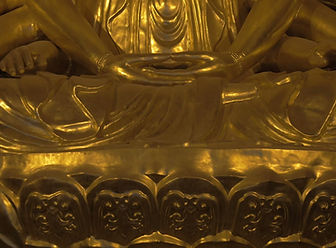
Hinduism
Continuity, plurality, and cosmic order
Approximate Date Range: c. 2000 BCE – Present (with earlier roots)
Geographic Origins: Indus Valley and greater Indian subcontinent
Hinduism is the oldest continuously practiced religious tradition in the
world, but it is not a single religion founded by one person or event. It is
a vast family of philosophies, rituals, myths, and metaphysical systems
that evolved over millennia. The term Hinduism itself is a later external
label, derived from the Indus River. Internally, traditions refer instead to
Dharma: cosmic order, ethical duty, and right relationship. Hinduism contains theistic and non-theistic schools, devotional, ritual, philosophical, and ascetic paths, householder and renunciate models, world-affirming and world-transcending views.
Contradiction is not a flaw here. It is a feature.
Resources
Sacred Texts – Hindu Scriptures Archive
Internet Archive – Vedas, Upanishads, Epics
Stanford Encyclopedia of Philosophy – Hindu Philosophy
Timeline Highlights
-
c. 2600–1900 BCE – Indus Valley Civilization (proto-religious roots debated)
-
c. 1500–1200 BCE – Composition of the early Vedas
-
c. 800–400 BCE – Upanishadic period (philosophical turn)
-
c. 400 BCE–400 CE – Epic age (Mahabharata, Ramayana)
-
c. 300–1200 CE – Puranic synthesis and devotional movements
-
Medieval period – Bhakti movements, temple culture, sect formation
-
Colonial & modern eras – Reform movements, global transmission
Textual Development
Hinduism has no single canon. Instead, texts are layered:
-
Śruti (that which is heard)- Considered revealed wisdom
-
The Vedas
-
The Upanishads
-
-
Smṛti (that which is remembered)- Interpretive, narrative, and applied texts
-
Epics (Mahabharata, Ramayana)
-
Puranas
-
Dharma Shastras
-
Texts were composed, expanded, and reinterpreted across centuries, reflecting changing social, political, and metaphysical needs.
Cosmology
At the heart of Hindu cosmology lies Brahman: the infinite, unchanging, absolute reality underlying all existence. Brahman is not a creator god in the Western sense, but being itself, beyond form and name.
The universe is understood as cyclical, not linear, eternal in process, not created once, and periodically manifested and dissolved
Creation and Cycles
Time unfolds in vast cycles:
-
Yugas (ages within ages)
-
Manvantaras (epochs of humanity)
-
Kalpas (days of cosmic creation)
Creation, preservation, and dissolution occur endlessly, expressed through cosmic functions rather than moral drama.
The Trimurti (Cosmic Functions)
-
Brahma – creation and manifestation
-
Vishnu – preservation and balance
-
Shiva – dissolution and transformation
These are not competing gods but expressions of cosmic process.
The Structure of the Cosmos
-
Multiple lokas (worlds or planes of existence) stacked vertically
-
Mount Meru as the symbolic cosmic axis
-
Heavens, earthly realms, and subtle realms populated by devas, asuras, ancestors, and humans
These realms function both cosmologically and symbolically, reflecting states of consciousness and karmic consequence.
Atman, Samsara, and Moksha
-
Atman: the innermost self, identical in essence to Brahman
-
Samsara: the cycle of birth, death, and rebirth
-
Moksha: liberation through realization of unity with Brahman
Liberation is not escape from existence, but awakening to true nature.
Major Characters & Archetypes
Brahman
-
Ultimate reality beyond form and duality
-
Impersonal, infinite, and all-pervading
Vishnu
-
Preserver of cosmic order
-
Descends through avatars (Rama, Krishna) when dharma declines
Shiva
-
Destroyer and transformer
-
Ascetic, yogi, householder, and cosmic dancer
-
Governs death, rebirth, and transcendence
Devi (The Goddess)
-
The dynamic, creative power of reality (Shakti)
-
Appears as Durga, Kali, Lakshmi, Saraswati, and others
-
Embodies protection, abundance, wisdom, and fierce compassion
Epic Figures
-
Krishna – divine teacher and strategist
-
Rama – embodiment of righteous kingship
-
Arjuna – the conflicted seeker
-
Hanuman – devotion, strength, and service
These figures function simultaneously as mythic heroes, ethical exemplars, and metaphysical symbols.
Core Narrative Summary
Reality is eternal, infinite, and alive.
The universe arises from Brahman, unfolds through cycles of creation and dissolution, and expresses itself in countless forms. All beings participate in this cosmic rhythm, bound by karma and rebirth until they remember their true nature. Human life is not a test of belief, but a field of responsibility. Each person is born into a web of relationships, duties, and consequences shaped by past action. This is dharma, not as rigid law, but as alignment with cosmic order. Over time, desire, ignorance, and attachment obscure the truth of unity. The self forgets itself and mistakes the temporary for the eternal. Suffering arises not because the world is evil, but because perception is incomplete.
Paths emerge to address this:
-
Jnana (knowledge)
-
Bhakti (devotion)
-
Karma (action)
-
Raja (meditation)
No single path suits all beings.
Through insight, devotion, disciplined action, or surrender, one may awaken to the realization that Atman is Brahman. Liberation is not annihilation, but remembrance. The story has no final ending. The universe dissolves, rests, and is born again.
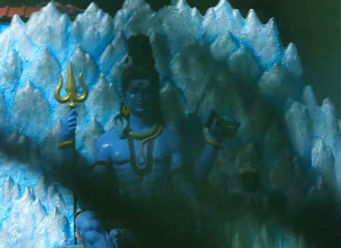
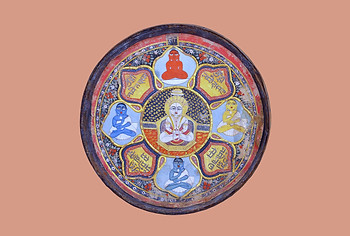
Jainism
Liberation through restraint
Approximate Date Range: c. 6th century BCE – Present
Geographic Origin: Indian subcontinent
Jainism is one of the world’s oldest continuously practiced spiritual
traditions. It emerged in ancient India alongside early Buddhism and
Hindu reform movements, emphasizing self-discipline, ethical purity,
and liberation through non-harm rather than devotion to a creator deity.
The tradition is most strongly associated with Mahavira, regarded as the
last of a lineage of enlightened teachers known as Tirthankaras
(“ford-crossers”), who show the way across the cycle of rebirth. Jainism has remained relatively small in numbers, but outsized in ethical influence, particularly in its articulation of non-violence.
Resources
Stanford Encyclopedia of Philosophy — Jainism
JainWorld — Texts and Teachings
Historical Dictionary of Jainism
Cosmology
An eternal universe without a creator. Jain cosmology is non-theistic. The universe has no beginning and no creator god. It operates according to natural laws and cycles.
Reality is composed of two fundamental categories:
-
Jiva – living souls
-
Ajiva – non-living matter, space, time, motion, rest
All souls are inherently pure and luminous but become bound through karma, understood as subtle material accumulation, not divine judgment. Liberation (moksha) occurs when the soul is completely freed from karmic matter.
Core Ethical Principle: Ahimsa
Non-violence as absolute discipline. Jainism’s defining principle is ahimsa — non-violence toward all living beings, down to insects and microorganisms. This ethic is not symbolic or aspirational. It is literal and rigorous.
Practices include:
-
Strict vegetarianism (often veganism)
-
Careful movement to avoid harming life
-
Filtering water
-
Non-possessiveness
-
Truthfulness
-
Sexual restraint or celibacy
Jain monks and nuns take these principles to their extreme expression, while lay followers practice moderated forms.
Karma and Liberation
Responsibility without forgiveness mechanics. In Jainism, karma is not moral bookkeeping by a deity. It is cause and effect embedded in matter itself. Actions, intentions, and attachments bind karmic particles to the soul. Liberation is achieved not through grace or belief, but through ethical living, ascetic discipline, detachment, and knowledge. This produces a spiritual framework that is highly self-responsible, but also austere.
Practices and Community
Ascetic core, lay support. Jain communities are structured around ascetics (monks and nuns) and lay householders who support them. The ascetic path is considered the highest expression of liberation, while lay life focuses on ethical living and karmic reduction. Unlike mystery schools, Jainism emphasizes renunciation over initiation, and restraint over ritual transformation.
Relationship to Other Traditions
Jainism influenced:
-
Hindu concepts of ahimsa
-
Buddhist ethical frameworks
-
Indian vegetarian culture
-
Later figures such as Gandhi
However, Jainism does not emphasize goddess worship, ritual descent, or cosmological myth in the way other traditions you’ve covered do. Its power is ethical, not mythic.
Why Jainism Matters (and Where It Doesn’t Intersect)
Jainism offers:
-
One of the most uncompromising ethical systems ever developed
-
A powerful counterweight to violence-based spirituality
-
A model of radical responsibility
It does not significantly influence:
-
Western esotericism
-
Mystery traditions
-
Political theology
-
Apocalyptic or mythic frameworks
Its contribution is moral clarity, not symbolic lineage.

Living in accordance with the Way
Approximate Date Range: c. 6th–4th century BCE – Present
Geographic Origin: Ancient China
Taoism arises as a philosophical and spiritual tradition focused on harmony
with the natural order, rather than obedience to divine authority or
mastery over reality. It develops alongside Confucianism but moves in the
opposite direction: away from rigid social structures and toward simplicity,
spontaneity, and naturalness. The tradition is most closely associated with
Laozi, the semi-legendary author of the Tao Te Ching, and later expanded
by Zhuangzi, whose stories emphasize paradox, humor, and the limits of
conceptual thinking. Taoism exists in two overlapping forms:
-
Philosophical Taoism (Daojia)
-
Religious Taoism (Daojiao)
This section focuses primarily on the philosophical current, which has the
widest influence.
Resources
Stanford Encyclopedia of Philosophy — Daoism
Internet Archive — Taoist Classics and Commentary
Core Concept: The Tao
The Way that cannot be named
The Tao (Dao) is the underlying principle of reality. It is not a god, not a lawgiver, and not a moral judge.
The Tao is the source of all things, the process by which things arise, change, and dissolve, and beyond full conceptual description. “The Tao that can be spoken is not the eternal Tao.” Rather than explaining the universe, Taoism teaches how to move with it.
Cosmology
Dynamic balance, not creation- Taoist cosmology emphasizes process over origin. Reality is understood as a continuous flow of transformation rather than a creation event.
Key elements include:
-
Yin and Yang – complementary, interdependent forces
-
Qi (Chi) – vital energy animating all things
-
Wu Ji → Tai Ji – undifferentiated potential giving rise to polarity
There is no cosmic battle between good and evil. Harmony arises from balance, not conquest.
Wu Wei
Effortless action
One of Taoism’s most influential principles is wu wei, often mistranslated as “non-action.” Wu wei means action without force, responsiveness without strain, and alignment rather than control. It does not mean passivity. It means acting at the right moment, in the right way, with minimal resistance. This principle deeply influenced: Chinese medicine, martial arts, governance philosophy, and later Zen Buddhism
Ethics and Way of Life
Simplicity over domination
Taoist ethics are implicit rather than rule-based. Virtue (de) emerges naturally when one lives in harmony with the Tao.
Common Taoist values include:
-
Humility
-
Simplicity
-
Flexibility
-
Compassion
-
Non-attachment
Rigid moralism is seen as a sign that natural harmony has already been lost.
Practices
Embodiment without ascetic extremism
Taoist practice often includes breathwork, meditation, movement (e.g., Tai Chi, Qigong), longevity practices, and observation of nature. Unlike ascetic traditions, Taoism does not emphasize renunciation of the body, but integration with it.
Relationship to Other Traditions
Taoism influenced:
-
Zen / Chan Buddhism
-
Chinese medicine
-
Internal martial arts
-
East Asian aesthetics and poetry
It contrasts sharply with:
-
Apocalyptic worldviews
-
Salvation-through-suffering frameworks
-
Domination-based cosmologies
Taoism is life-tending, not world-rejecting.
Taoism (Daoism)

Confucianism
Cultivating virtue to stabilize the world
Approximate Date Range: c. 5th century BCE – Present
Geographic Origin: Ancient China
Confucianism emerges not as a mystical or revelatory tradition, but as an
ethical–philosophical system aimed at restoring social harmony during a
period of political chaos in ancient China. It is founded on the teachings of
Confucius (Kong Fuzi), whose ideas were later compiled by his students
in the Analects. Confucianism is less concerned with the cosmos or
salvation and more concerned with how humans should live together.
Resources
Stanford Encyclopedia of Philosophy — Confucianism
Internet Classics Archive — The Analects
Core Orientation
Order through virtue, not force
At its heart, Confucianism argues that society functions best when individuals cultivate moral character and fulfill their roles with integrity. The focus is on ethical behavior, education, ritual propriety, and social responsibility. Rather than changing the world through spiritual transformation, Confucianism seeks to stabilize it through moral cultivation.
Key Concepts
-
Ren (Humaneness): Compassion, empathy, and moral sensitivity
-
Li (Ritual Propriety): Proper conduct, customs, and social norms
-
Yi (Righteousness): Acting rightly rather than for personal gain
-
Xiao (Filial Piety): Respect for family and ancestors
-
Junzi (Noble Person): One who leads through virtue, not coercion
These principles aim to create harmony through self-regulation rather than punishment.
Cosmology
Minimal and pragmatic
Confucianism does not deny Heaven (Tian), but it avoids speculation about metaphysics, the afterlife, or divine intervention.
Heaven is understood as a moral order, an impersonal guiding principle, and a source of legitimacy for ethical rule. Confucius famously avoided speculation about gods, spirits, or death, focusing instead on life and conduct.
Ritual and Practice
Form as moral training
Ritual in Confucianism is not magical or initiatory. It is educational. Through repeated correct behavior character is shaped, ego is tempered, and social trust is reinforced. Ritual trains people to act ethically even when emotions run high.
Relationship to Taoism and Buddhism
Confucianism contrasts with:
-
Taoism, which values spontaneity over structure
-
Buddhism, which emphasizes liberation from suffering
In practice, Chinese culture often integrated all three:
-
Confucianism for governance and ethics
-
Taoism for harmony with nature
-
Buddhism for metaphysical and soteriological questions
Confucianism provided the spine of social order.
Strengths and Limitations
Strengths
-
Emphasizes responsibility and education
-
Reduces chaos without reliance on fear
-
Encourages ethical leadership
Limitations
-
Reinforces hierarchy
-
Can suppress individuality
-
Less room for mystical or feminine spiritual expression
Confucianism tends toward patriarchal stability rather than transformation.
Why Confucianism Matters
Confucianism shaped:
-
Chinese governance for over two millennia
-
East Asian family structures
-
Educational ideals
-
Bureaucratic ethics
Its influence is civilizational rather than mystical.

Shinto
Indigenous spirituality of Japan
Approximate Date Range: Prehistoric origins – Present
Geographic Origin: Japanese archipelago
Shinto is the indigenous spiritual tradition of Japan, emerging organically
from land, ancestry, and daily life rather than from a founder, prophet, or
revealed scripture. The word Shinto means “the Way of the Kami.”
Unlike most traditions covered elsewhere in this document, Shinto is:
non-theological, non-dogmatic, and non-salvational. It is a relational and
place-based spirituality, concerned less with belief than with right
relationship.
Resources
Stanford Encyclopedia of Philosophy — Shinto
Encyclopaedia Britannica — Shinto
Core Concept: Kami
Sacred presence, not gods
Kami are not gods in the Western sense. They are sacred presences that inhabit natural features (mountains, rivers, trees, stones), ancestors, exceptional people, forces of nature, and certain locations and moments. Kami are not omnipotent or morally absolute. They can be benevolent, ambiguous, or even disruptive. Shinto does not moralize them; it respects and appeases them. This worldview treats the world itself as alive and responsive.
Cosmology
Immanence over transcendence
Shinto cosmology does not posit a creator god, a final judgment, an apocalyptic end, or a doctrine of salvation .Instead, it assumes the sacred is already present within the world. Mythic narratives describing the origins of Japan and its kami are preserved in early texts such as the Kojiki and Nihon Shoki, but these function more as cultural memory than theological authority.
Purity and Pollution
Ritual cleanliness, not moral guilt
A central Shinto concern is the distinction between:
-
Purity (harae)
-
Pollution (kegare)
Pollution arises from death, blood, illness, and disorder. It is not sin. It is imbalance. Purification rituals restore harmony through washing, prayer, and ritual acts. There is no confession, no moral judgment, and no eternal consequence.
Practices
Everyday reverence
Common Shinto practices include shrine visitation, offerings and prayers, seasonal festivals (matsuri), ritual purification with water, and respect for ancestral spirits. rituals reinforce attentiveness to place, season, and community rather than transcendence or escape.
Relationship to Other Traditions
Shinto historically coexisted with:
-
Buddhism (often practiced side-by-side)
-
Confucian ethics
-
Taoist cosmology
Rather than competing, Shinto absorbed and adapted, maintaining its non-exclusive character.
State Shinto, developed in the modern era, represents a political distortion rather than the essence of the tradition.

Kabbalah
Jewish Mysticism: Hidden wisdom, cosmic fracture, and the danger of
knowing too much
Kabbalah is the esoteric current within Judaism, developed not as an
alternative to law or scripture, but as its inner engine. It was never meant
for the masses, not because it was elitist, but because it was believed to
be destabilizing if approached without grounding, maturity, and ethical
containment. Historically, Kabbalah was restricted to advanced
practitioners, considered spiritually and psychologically dangerous,
understood as operative, not merely symbolic This matters. From its
earliest strata, Kabbalah was assumed to affect reality, not just describe it.
Resources
Sefaria – Zohar and Kabbalistic Texts (Primary Sources)
Jewish Virtual Library – Kabbalah (Historical & Grounded)
Stanford Encyclopedia of Philosophy – Kabbalah
Major Historical Layers
Merkabah Mysticism (1st–6th centuries CE)
Early Jewish visionary traditions focused on ascent through heavenly palaces, angelic hierarchies, and direct encounter with divine power. These were ecstatic, embodied, and risky practices. Some texts explicitly warn that not all who ascend return intact.
Medieval Kabbalah (12th–13th centuries)
The emergence of the Zohar, attributed pseudonymously to Shimon bar Yochai, but composed in medieval Spain. The Zohar reframes biblical stories as cosmic dramas, introducing a complex mythic theology centered on divine masculinity, femininity, exile, and reunion.
Lurianic Kabbalah (16th century, Safed)
Systematized by Isaac Luria (the Ari). This is the most influential form of Kabbalah today. Luria introduced a radical cosmology of divine contraction, catastrophe, and repair. Creation is no longer orderly or intact. It is broken at the root.
Post-medieval diffusion
Kabbalah flows outward into Christian Kabbalah, Hermeticism and Renaissance magic, Alchemy and occult orders, and modern esoteric and elite spiritual systems. At each step, ethical guardrails weaken while technique survives.
Cosmology
Creation as rupture, not perfection
Kabbalah begins where most theologies end: with the claim that creation itself failed.
Ein Sof: The Infinite
At the source is Ein Sof, the infinite, unknowable divine reality. Ein Sof is not a god with attributes. It cannot be prayed to directly or described meaningfully. All that exists comes from it, but it is beyond existence.
Tzimtzum: Divine Withdrawal
Creation begins when Ein Sof contracts, withdrawing itself to create a void in which existence can arise. This is not a gentle act. It introduces absence, separation, and tension God makes room for something other than God.
The Shattering of the Vessels (Shevirat ha-Kelim)
Divine light pours into finite vessels designed to channel it. The light is too intense. The vessels shatter. Fragments of divine light fall into the material world, trapped within Qliphoth (shells or husks). Reality becomes a mixture of holiness and distortion, light and blockage. This is a cosmology of cosmic trauma.
The Tree of Life and the Feminine Divine
The divine now manifests through ten emanations, the Sefirot, arranged as the Tree of Life. These are not abstract qualities. They are living forces. At the base of the Tree is Shekhinah.
Shekhinah is:
-
The indwelling presence of God
-
The feminine aspect of the divine
-
The world itself in exile
-
God with humanity, not above it
In Kabbalistic myth, Shekhinah is separated from the upper Sefirot. She descends into the broken world, carrying divine light with her. Sound eerily like Sophia in Gnosticism? This is where Kabbalah directly echoes older mythic currents.
The Central Narrative
The descent, the exile, and the work of repair
The story Kabbalah tells is not one of fall through sin, but of fracture through excess light. Creation breaks. God is divided. The feminine divine descends into matter. Humanity is born into a world that is already wounded. This is why Tikkun Olam is not charity alone. It is cosmic repair. Every action, intention, prayer, ethical choice, and relational act can release trapped sparks of divine light, or deepen their entrapment. Human beings are not passive worshippers. They are co-creators and repairers.
The Shadow Side: Qliphoth and Misuse of Power
Opposite the Tree of Life is the Qliphothic system.
The Qliphoth are not “demons” in a simplistic sense. They are:
-
Distorted divine forces
-
Power without balance
-
Severity without compassion
-
Intellect severed from wisdom
-
Will severed from care
This is why Kabbalah was restricted. Not because knowledge is evil, but because unintegrated power amplifies pathology. When spiritual technique is divorced from ethical containment, it feeds ego, domination, control, and dehumanization. Kabbalah does not deny this risk. It maps it.
Power, Secrecy, and the Modern World
It must be stated plainly: Powerful people believe Kabbalah works, and they practice it regularly.
Historically .Kings employed Kabbalists. Amulets, names, numerology, and ritual timing were used for protection and influence. Divine names were treated as engines, not metaphors
In modern contexts, Kabbalistic concepts have been commercialized, been stripped of ethical frameworks, and been selectively retained for power-oriented practice. This is not conspiracy. It is belief-driven behavior. When people believe reality is responsive to ritual, intention, and symbolic action, they behave accordingly.
Deep Mythic Parallels (Explicit)
Here is where the integration matters most.
-
Inanna’s Descent → Shekhinah’s Exile
The divine feminine descends, is stripped, killed or fragmented, and awaits restoration.
This is not coincidence. It is continuity. -
Sophia → Chokhmah / Binah
Feminine wisdom as generative intelligence, not obedience. -
Egyptian Ma’at → Tiferet
Balance sustains reality, not domination. -
Prometheus / Enki → Human role in Tikkun
Knowledge given despite divine restriction, at great cost.
Kabbalah does not erase older myths. It internalizes them.
Why Kabbalah Is Dangerous and Necessary
Kabbalah says reality is broken, God is not finished, power is real, repair is ongoing, intention matters, and misuse has consequences. And it implies something even more unsettling: If consciousness affects reality, then consciousness must be handled with care. This is why Kabbalah has always lived at the edge of danger.
Transformation, not transcendence
Approximate Date Range: c. 300 BCE – 1700 CE (with earlier roots and later survivals)
Geographic Spread: Egypt, Greece, the Islamic world, India, China, and later Europe
Alchemy is not a single tradition and never truly becomes one. It arises
independently across cultures as a technology of transformation,
grounded in metallurgy, medicine, cosmology, and spiritual inquiry. What
unites these traditions is not doctrine, but orientation: the conviction that
matter is alive, responsive, and capable of refinement. Unlike Hermeticism,
which speaks primarily to mind and perception, alchemy speaks to process,
it is slow, embodied, repetitive, and often frustrating. It demands patience,
humility, and endurance. There are no shortcuts. Alchemy was never primarily about making gold. Gold was a symbol: incorruptibility, wholeness, coherence. The true work was always the transformation of the practitioner alongside the substance. This is why alchemy resists institutionalization. It cannot be standardized without losing its essence.
Resources
Sacred Texts – Alchemy Collection
Alchemy- by Diana Fernando
Real Alchemy- A Primer of Practical Alchemy
Alchemy as a Way of Knowing
Truth that must be endured
Alchemy assumes something radical: matter is not dead. Stones grow. Metals mature. Substances have temperaments, affinities, and wills. The alchemist does not dominate matter but enters into relationship with it. Knowledge in alchemy is not gained through belief or revelation alone. It is earned through observation, experiment, failure, repetition, and time. Alchemy does not reward cleverness. It rewards presence. This makes it fundamentally anti-authoritarian. No title, initiation, or rank can bypass the work. The furnace does not care who you are.
Core Alchemical Principles
How transformation unfolds
Alchemy does not offer laws in the abstract sense. It offers stages and dynamics observed repeatedly in both matter and psyche.
The Prima Materia- All alchemical work begins with prima materia: the raw, chaotic, unrefined substance. It is often described as base, impure, or rejected. Symbolically, prima materia is what we avoid, what is unconscious, what is wounded, and what is unformed. Alchemy begins not with purity, but with what is already present.
The Three Alchemical Substances
Across traditions, alchemy works with three core principles:
-
Sulfur – soul, fire, desire, volatility
-
Mercury – spirit, mind, movement, mediation
-
Salt – body, structure, fixation
These are not chemicals. They are modes of being present in all things, including humans. Balance among them is transformation.
The Magnum Opus
The Great Work
The alchemical process unfolds through recognizable stages. These stages are not linear guarantees. They recur, overlap, and repeat.
Nigredo – Blackening
Decay, dissolution, darkness, confusion. This is the breaking down of identity, certainty, and form. Old structures rot. Meaning collapses. This stage is often experienced as depression, loss, or crisis. Alchemy insists: Do not flee this stage.
Albedo – Whitening
Purification, clarification, separation. Out of chaos, patterns emerge. What is essential separates from what is not. Insight returns, but humility remains. This is not enlightenment. It is cleaning.
Citrinitas – Yellowing (sometimes omitted in later systems)
Awakening, vitality, integration. Here, life returns. Energy stabilizes. Purpose begins to glow faintly. This stage was often dropped in later Western alchemy, but earlier traditions considered it essential.
Rubedo – Reddening
Completion, embodiment, coherence. Rubedo is not escape. It is return. The transformed substance is reintroduced into the world. The work becomes visible, practical, and alive. The philosopher’s stone is not perfection. It is integration.
The Alchemical Marriage
Union, not conquest
One of alchemy’s central images is the coniunctio: the sacred marriage of opposites. Often depicted as a king and queen, sun and moon, sulfur and mercury. This is not domination of one by the other. It is reciprocity. Alchemy refuses purity through exclusion. It insists on wholeness through union. This is one reason alchemy preserved the sacred feminine more consistently than many other Western traditions.
The Laboratory and the Body
Why alchemy stays embodied
Alchemy happens in furnaces, retorts, and alembics — but also in bodies, emotions, and lives. The athanor, the alchemical furnace, is both literal and symbolic: it maintains steady heat, it does not rush, it allows transformation to occur in its own time
The alchemist’s body and nervous system are part of the apparatus. This is why alchemy can be dangerous if approached without grounding. The work affects psyche, identity, and physiology. Alchemy cannot be done safely at scale. It is inherently personal.
Ethics and Resistance to Power
Why alchemy does not build systems
Alchemy does not lend itself to governance.
-
It cannot be standardized
-
It cannot be mass-produced
-
It cannot be abstracted without loss
-
It offers no reliable shortcuts
For this reason, alchemy was marginalized, mocked, or absorbed symbolically rather than structurally. Where other traditions were turned into hierarchies, alchemy survived as metaphor, art, and private practice. It quietly resisted the transformation of wisdom into control.
Relationship to Other Traditions
Alchemy intersects with:
-
Hermeticism (cosmic correspondence)
-
Medicine (healing and balance)
-
Mysticism (inner transformation)
-
Psychology (later reframed by Jung)
But it never collapses into any of them. Alchemy insists that truth must touch matter.
What Alchemy Is Not
Alchemy is not:
-
A get-rich scheme
-
Symbolism detached from practice
-
A ladder of initiation grades
-
A method of control over others
Those interpretations arise later, when alchemy is mined for power rather than lived.
Alchemy

Hermeticism

Gnosis, mind, and the living cosmos
Approximate Date Range: c. 1st century BCE – 3rd century CE (core texts)
Geographic Center: Hellenistic Egypt, especially Alexandria
Resources
Corpus Hermeticum – translations (Sacred Texts)
Stanford Encyclopedia of Philosophy – Hermeticism
Hermeticism arises in Hellenistic Egypt, a cultural and intellectual
crossroads where Egyptian temple theology, Greek philosophy, astrology,
and early science coexisted without collapsing into a single doctrine. It is
not a folk religion, not a civic cult, and not an organized mystery order in
the later institutional sense. It is best understood as a gnostic philosophical
tradition concerned with direct knowing of reality. Hermetic teachings are
attributed to Hermes Trismegistus, a mythic figure blending the Greek
Hermes and the Egyptian Thoth. Hermes Trismegistus is not a historical
individual, but a transmitter archetype: a name used to authorize wisdom
believed to be ancient, perennial, and cross-cultural. Hermetic texts were
composed as dialogues, revelations, and instructions between teacher and
student. They were never intended to found a church, impose belief, or
govern society. Their concern is awakening, not obedience.
The Hermetic Principles (Laws) of the Universe
How reality behaves, not rules to be obeyed
Hermeticism does not offer commandments. It offers observations about the nature of reality as discerned through contemplation, philosophy, and direct insight into the living cosmos. Important historical clarification- The formulation commonly known as the “Seven Hermetic Principles” appears most clearly in The Kybalion (1908), a modern Hermetic summary text. While not an ancient source itself, these principles are faithful syntheses of ideas found throughout the Corpus Hermeticum, Platonic philosophy, and Hellenistic cosmology. They are best treated as maps, not dogma.
1. The Principle of Mentalism
The All is Mind
Reality is fundamentally intelligible and ordered by Nous (divine mind). Matter is not inert or accidental. Consciousness is not a byproduct of matter; rather, matter participates in mind. This does not mean reality is imaginary. It means reality is structured by intelligence, and human consciousness can resonate with that structure.
2. The Principle of Correspondence
As above, so below; as below, so above
Patterns repeat across scales. The structure of the cosmos mirrors the structure of the soul. Inner states reflect outer conditions, and outer harmony reflects inner alignment. This principle is descriptive, not manipulative. It explains astrology, symbolism, and myth as pattern recognition, not fate or control.
3. The Principle of Vibration
Everything moves
Nothing is static. All things vibrate, oscillate, and transform. Differences arise from rate and degree, not essence.
In Hermetic thought, being itself is dynamic. Transformation is natural, not forced.
4. The Principle of Polarity
Opposites are extremes of the same thing
Light and dark, masculine and feminine, order and chaos are poles of a continuum. Extremes meet. Integration is wiser than suppression. This principle resists rigid dualism and moral absolutism.
5. The Principle of Rhythm
All things move in cycles
Rise and fall, expansion and contraction, birth and decay govern existence. Suffering arises from resisting rhythm rather than aligning with it. Hermeticism seeks attunement, not escape.
6. The Principle of Cause and Effect
Nothing happens in isolation
Events arise from conditions. “Chance” is causation not yet perceived. This principle implies responsibility and awareness, not punishment. Hermetic causality resembles karma rather than judgment.
7. The Principle of Gender
Creation arises through complementary forces
Gender here refers to active and receptive principles, not biological sex. All creation requires interplay, balance, and relationship. When this principle is distorted, hierarchy replaces harmony.
Hermetic Cosmology
A living, ensouled universe- Hermetic cosmology begins with The One, the ineffable source. From the One emanates Nous, the ordering intelligence. From Nous emerges the cosmos as a living organism, rational and ensouled. Creation is not ex nihilo.
It is emanation, expression, and participation. Stars, planets, elements, and beings are expressions of a single unfolding intelligence.
The Human Being
A bridge between worlds- Human beings occupy a unique position in Hermetic thought. They are part material, part divine, capable of ignorance, and capable of awakening. The human tragedy is not sin, but forgetfulness. Through gnosis, the soul remembers its origin and realigns with Nous. This is not escape from the world. It is seeing the world clearly.
Gnosis as Liberation
Knowing as remembering- Hermetic salvation is not achieved through moral compliance or ritual obedience. It is achieved through recognition. To know is to remember who and what one is. Gnosis is experiential, personal, and transformative. Teachers guide, but do not command. Initiation is relational, not institutional. This is why Hermeticism resists hierarchy.
Ethics, Power, and Humility
Why Hermeticism does not build empires- Hermetic texts consistently warn against pride, domination, and the misuse of knowledge. Power pursued for its own sake is described as a sign of continued sleep. Knowledge increases responsibility, not entitlement. Alignment produces influence naturally. Coercion indicates misalignment.
Relationship to Other Traditions
Hermeticism resonates with:
-
Egyptian theology (Thoth, Ma’at, cosmic order)
-
Greek Platonism (Nous, ascent of the soul)
-
Gnostic traditions (awakening through knowledge)
-
Early Christian language of Logos and Light (without institutional alignment)
It remains distinct while adjacent.
African Traditions
African Traditional Religions (ATR) are not “primitive belief systems,” nor
are they monolithic. They are complex theological cosmologies developed
over thousands of years across diverse regions, languages, and cultures of
the African continent.
Resources
African Traditional Religions (Stanford Encyclopedia of Philosophy)
Set Free Alliance- Traditional African Religions
Common theological characteristics include:
-
A Supreme Creative Source (often distant, generative, or
non-interventionist)
-
A pantheon of deities or divine intelligences associated with forces of
nature, human experience, morality, and fate
-
Centrality of ancestor veneration
-
Theology embedded in daily life, land, kinship, and ethics rather than
abstract doctrine
ATR theology was oral, relational, and place-based, not text-bound. Knowledge lived in ritual, story, lineage, and land.
Deities as Living Theology
Across many African cosmologies, deities were not distant gods to be worshipped abstractly. They were relational forces, intelligences with domains, personalities, histories, and moral weight.
Examples across regions include:
-
Orisha (Yoruba traditions): divine forces governing elements such as water, thunder, fertility, crossroads, healing, justice, and destiny
-
Vodun (Fon and Ewe traditions): spirits and divine principles tied to family, land, and cosmic order
-
Nkisi / Minkisi (Kongo traditions): spirit-activated vessels embodying power, protection, justice, and healing
These deities were approached through relationship, not domination. Honored through reciprocity, not blind obedience. Integrated into ethical life, not removed into heaven
The Middle Passage: Theological Catastrophe
The transatlantic slave trade did not merely transport bodies. It violently severed theology from land, language, lineage, and ritual continuity. People were taken from different nations, languages, and religious systems, stripped of sacred sites, temples, and community elders, and forced into Christian cosmologies under threat of violence. This created a theological rupture unlike any other in history. Yet something extraordinary occurred: The gods crossed the ocean inside people. Deities, cosmologies, ancestral memory, and ritual fragments survived without texts, without temples, and without safety. Theology became portable.
Unmooring and Reconstitution
Once in the Americas, African peoples were deliberately mixed to prevent shared language and rebellion. This forced theological recombination.
What emerged was not a single preserved religion, but:
-
Syncretized cosmologies
-
Deities masked behind Catholic saints
-
Spirits remembered through rhythm, song, gesture, and coded ritual
-
Theology adapted to survival under constant threat
This process directly gave rise to:
-
Haitian Vodou
-
Louisiana Voodoo
-
Cuban Santería
-
Brazilian Candomblé
-
Hoodoo / Conjure (as non-religious folk spirituality)
These were not corruptions. They were theology under siege.
Why Hoodoo and Voodoo Took Shape
Hoodoo and Voodoo are products of displacement, not inventions of rebellion or darkness. Voodoo preserved religious structure, spirits, ritual, and priesthood where possible. Hoodoo preserved practical spiritual survival where religion itself was too dangerous to practice openly. Both carry African deities remembered through fragments, ancestor veneration as a central pillar, theology rooted in justice, protection, and survival, and deep suspicion of centralized religious authority. Their emergence makes sense only when African theology is understood as displaced, not erased.
Theological Consequences Still Felt Today
The forced unmooring of African theology has lasting consequences:
-
Mislabeling African-derived religions as “dark” or “primitive”
-
Erasure of African gods while preserving European ones
-
Appropriation without understanding trauma or context
-
Spiritual colonialism disguised as “universal spirituality”
Understanding ATR in the history of theology is essential to dismantling these distortions.
How This Community Holds African Traditional Religions
This community approaches African Traditional Religions as:
-
Foundational theological systems, not exotic footnotes
-
Living lineages, not aesthetic resources
-
Traumatized but resilient cosmologies, not myth fragments
We do not extract practices. We do not universalize deities. We do not flatten difference. We honor that entire theologies survived the Middle Passage, reshaped by terror, brilliance, and care.

Voodoo & Hoodoo
Voodoo (also spelled Vodou, Vodun, or Vaudou depending on region) is a
living, initiatory religion rooted in West and Central African spiritual
systems and carried into the Americas through the transatlantic slave trade.
It developed most visibly in Haiti, Louisiana, and parts of the Caribbean
through syncretism with Catholicism under conditions of extreme violence,
forced conversion, and cultural erasure. Hoodoo, by contrast, is not a
religion. It is a system of African American folk magic, rootwork, and
spiritual practice that emerged in the United States as a survival technology
under slavery and segregation. Hoodoo draws from African spiritual
frameworks, Indigenous plant knowledge, and European folk practices,
shaped by necessity, land, and community transmission. Both traditions
are inseparable from histories of enslavement, resistance, ancestor
veneration, and spiritual resilience. They are not interchangeable, and
neither can be meaningfully understood outside their cultural and historical context.
Resources
Vodou Archive – University of Florida Digital Collections
Primary Sources – Haiti (Digital Library of the Caribbean)
Voodoo/Vodou Primary Sources Guide (CNU LibGuides)
Core Characteristics & Practices
Voodoo includes:
-
Formal ritual and ceremony
-
Spirit veneration and relationship
-
Priestly and initiatory roles
-
Community-based worship
-
Music, rhythm, dance, and embodied trance
-
Moral obligations to spirits, ancestors, and community
Hoodoo includes:
-
Rootwork and herbal knowledge
-
Protective and justice-oriented magic
-
Use of household objects, scripture, psalms, and charms
-
Practical workings for safety, healing, luck, and survival
-
Knowledge passed through families, communities, and lived experience
Hoodoo is pragmatic, adaptive, and deeply tied to the material realities of life. Voodoo is religious, relational, and cosmological. Overlap exists, but equivalence does not.
Relationship to Power, Spirits, or the Unseen
In Voodoo, spirits are not symbolic abstractions. They are understood as relational intelligences with preferences, obligations, and consequences. Power is not domination; it is reciprocity. One does not command spirits. One enters into relationship, service, and responsibility. In Hoodoo, the unseen is engaged through ancestral presence, spiritual authority earned through survival, and practical alignment with justice and protection. Power arises from knowing how to work with forces, not from claiming spiritual status. Both traditions reject the idea of spiritual power as entitlement. Power is contextual, relational, and accountable.
Ethical Considerations & Boundaries
This section is non-negotiable.
-
Voodoo is not open for casual adoption. Initiation, permission, and community context matter.
-
Hoodoo is not an aesthetic or spell menu. It is rooted in Black American history and survival.
-
Outsiders extracting symbols, rituals, or language without lineage, consent, or relationship perpetuate spiritual colonialism.
-
“DIY Voodoo” and “Hoodoo for everyone” narratives erase harm and history.
In this community, cultural respect is not performative. It is structural.
Common Misconceptions
-
Voodoo is not “dark magic,” curse-based, or inherently harmful.
-
Voodoo dolls as portrayed in media are distortions.
-
Hoodoo is not interchangeable with Wicca, witchcraft, or ceremonial magic.
-
Neither tradition exists for entertainment, shock value, or rebellion aesthetics.
Pop culture representations have done measurable harm by flattening, demonizing, and sensationalizing these traditions.
How This Community Approaches It
This community includes Voodoo & Hoodoo for education, clarity, and protection, not appropriation.
-
We discuss them contextually and respectfully
-
We do not teach rituals, spells, or initiations
-
We do not encourage people to practice without lineage or permission
-
We name boundaries clearly to prevent harm, misuse, and spiritual colonialism
Their inclusion serves a larger purpose: to remind us that spiritual systems emerge from real people under real conditions, and that matriarchal, relational spirituality has always been preserved through care, memory, and resistance.

Santería

Santería, also known as Regla de Ocha or Lucumí, is an Afro-Caribbean
religion that developed in Cuba between the 16th and 19th centuries
among enslaved Yoruba peoples forcibly transported from West Africa.
Its foundations lie in traditional Yoruba cosmology, ritual practice, and
priestly lineage systems. Under Spanish colonial rule, African religions were
violently suppressed. To preserve their spiritual systems, practitioners
strategically syncretized Yoruba deities with Catholic saints, allowing rituals
and devotion to continue under the appearance of Christian worship. This
was not conversion, but camouflage. African cosmology remained intact
beneath Christian imagery. Unlike folk-magic traditions, Santería retained
a formal priesthood, initiatory structure, and ethical framework, making it
a full religious system rather than a loose practice. Knowledge was
transmitted orally and ritually, emphasizing lineage, consent, and
responsibility rather than public texts.
Resources
Santeria- The Religion: Faith, Rights, Magick
Core Figures & Spiritual Hierarchy
At the center of Santería are the Orishas, divine intelligences governing
natural forces, human archetypes, and cosmic principles. Orishas are living
forces, not symbols, each with distinct attributes, taboos, and domains.
Key Orishas include:
• Eleguá – Guardian of crossroads, beginnings, fate, and communication; opener of all rituals
• Ogun – Iron, labor, technology, war, and survival through effort
• Ochún – Rivers, love, fertility, beauty, pleasure, and abundance
• Yemayá – Oceans, motherhood, protection, and emotional depth
• Changó – Thunder, justice, leadership, sexuality, and vitality
• Obatalá – Creation, wisdom, ethics, clarity, and the human form.
Above the Orishas is Olodumare, the supreme, remote Source. Olodumare is not worshipped directly; interaction occurs through Orishas, ancestors, and destiny.
Cosmology & Core Narratives
Santería presents a relational cosmology rather than a salvation-based one. Humans are born with an ori (spiritual head or destiny), which must be aligned through proper relationship with Orishas, ancestors, and community.
Central concepts include:
• Ashé – The animating life force that allows things to happen
• Ori – Personal destiny and spiritual alignment
• Balance over morality – Harmony matters more than abstract “good vs evil”
• Reciprocity – Relationships with Orishas require care, offerings, and respect
Narratives focus on how Orishas interact with one another and humanity, illustrating lessons about pride, patience, love, excess, discipline, and justice. These stories function as ethical maps rather than commandments.
Divination, especially through cowrie shells (dilogún), is used to identify imbalance, destiny shifts, and guidance. Initiation establishes lifelong obligation and protection rather than enlightenment or escape from the world.
Practice & Structure
• Initiatory religion with defined priesthood (santeros/santeras, babalawos)
• Ritual offerings to maintain balance and alignment
• Ancestral reverence as a stabilizing force
• Drumming, song, and dance to invite Orisha presence
• Possession may occur, but is regulated and contextual, not theatrical
Santería is not spellwork, manifestation culture, or ritualized wish-fulfillment. It is a discipline of relationship, obligation, and embodied spirituality.
Common Misconceptions
• Santería is not Vodou, though both are Afro-diasporic
• It is not “black magic” or curse-based
• Catholic saints are masks, not replacements
• It is not open-source spirituality; initiation and consent matter
Native North American Indigenous Cosmologies
Foundational Worldview: Many Nations, Many Theologies
There is no single Native North American religion. What exists instead are
hundreds of distinct cosmologies, each inseparable from land, language, kinship,
ecology, and oral transmission. These are not belief systems one “joins.” They are
relational theologies embedded in place and responsibility. Shared orientations
across many nations include the land as alive and sentient, time as cyclical, not
linear, humans as participants, not rulers, spiritual authority arising from relationship, not hierarchy. Knowledge is carried through story, ceremony, and lived practice rather than doctrine or scripture.
Resources
Encyclopedia Britannica Native American Religions
Pantheons, Sacred Beings, and Cosmological Forces (By Nation)
Each nation holds its own sacred beings, stories, and cosmological intelligences. The following are examples, not a unified pantheon.
Lakota / Plains Nations
-
Wakan Tanka: the Great Mystery, not a singular god but an encompassing sacred reality
-
White Buffalo Calf Woman: a sacred teacher who brought ceremony, ethical law, and right relationship
Hopi
-
Kachinas: spirit beings representing forces of nature, ancestors, and moral instruction
-
Kachinas are not gods in the Western sense, but relational intelligences who teach balance
Haudenosaunee (Iroquois Confederacy)
-
Sky Woman: central to creation stories
-
Turtle Island: Earth formed through cooperation, not conquest
Diné (Navajo)
-
Holy People: sacred beings who established the laws of harmony
-
Hózhó: balance, beauty, right relationship as theological center
These beings are not interchangeable, symbolic stand-ins, or archetypes to be universalized.
Prophecy as Ethical Teaching, Not Apocalypse
Indigenous prophecies are frequently misrepresented as end-times predictions. In truth, they function as ethical warnings and relational teachings.
White Buffalo Prophecy (Lakota)
The birth of a white buffalo is understood as a sign calling people back to:
-
Right relationship with the Earth
-
Balance between spiritual and material life
-
Respect for sacred law and community
It is not a date marker. It is a moral mirror.
Blue Star Kachina (Hopi)
Often distorted in New Age narratives, this prophecy speaks to:
-
Loss of balance
-
Disregard for sacred instructions
-
Consequences of spiritual arrogance and ecological harm
It is not meant to be extracted into universal timelines or spectacle. It belongs to Hopi cosmology and ethical teaching.
Colonization as Theological Violence
European colonization enacted direct theological destruction:
-
Forced removal severed cosmology from land
-
Boarding schools targeted language, ceremony, and identity
-
Christianity was imposed as a replacement theology
-
Sacred objects and stories were criminalized
This was not accidental cultural loss. It was intentional spiritual genocide. Yet the theologies survived.
Survival, Continuity, and Living Traditions
Despite centuries of suppression Indigenous cosmologies are alive. Ceremonies continue under sovereign protection. Prophecies remain ethical guides, not relics. Elders, storytellers, and knowledge keepers still speak. These traditions did not freeze in the past. They adapted without surrendering their core relational ethics.
This community holds Native North American Indigenous cosmologies with explicit boundaries:
-
Educational, not participatory
-
Contextual, not extractive
-
Respectful of sovereignty
-
No pan-Indigenous synthesis
-
No ritual instruction or ceremonial disclosure
We acknowledge these traditions as theological systems in their own right, not precursors, metaphors, or spiritual resources for outsiders.

Foundational Worldview: Cosmos as Cyclical, Living, and Demanding Balance
Mesoamerican theologies developed over millennia among civilizations
including the Maya, Mexica (Aztec), Zapotec, Mixtec, and others. These were
not small tribal belief systems, but complex, state-level cosmologies integrating
Astronomy and mathematics, sacred calendars, architecture aligned to celestial
cycles, and ritual obligation as cosmic maintenance. The universe was
understood as alive, cyclical, and unstable without human participation.
Theology was not about salvation from the world, but sustaining the world.
Resources
The Popol Vuh (World History Encyclopedia)
Aztec Religion & Cosmology (British Museum Learning Resource)
Maya Worldview & Cosmology (British Museum Learning Resource)
Pantheons and Divine Forces
Mesoamerican deities were cosmic forces embodied as intelligences, not moral abstractions.
Key Aztec (Mexica) Deities
-
Quetzalcoatl: feathered serpent, associated with wind, knowledge, creation, and moral order
-
Tezcatlipoca: god of night, conflict, mirrors, fate, and power; necessary chaos and testing
-
Huitzilopochtli: solar and warrior deity tied to movement, survival, and imperial expansion
-
Tlaloc: rain, fertility, and agricultural sustenance, both life-giving and destructive
Key Maya Deities
-
Itzamna: creator deity, wisdom, writing, and cosmic order
-
Chaac: rain and storm god, central to agricultural survival
-
Maize God: death, rebirth, sustenance, and cyclical life
These deities existed in dynamic tension, not hierarchical perfection.
Calendars as Theology
Time itself was sacred.
Mesoamerican civilizations used interlocking calendars such as:
-
Tzolkin (260-day ritual calendar)
-
Haab (365-day solar calendar)
-
Long Count (cosmic timekeeping)
Calendars governed ritual timing, agricultural cycles, political legitimacy, and cosmic alignment. Time was not linear progress. It was recurring obligation.
Creation, Destruction, and the Fragility of the World
Mesoamerican myths often describe multiple worlds created and destroyed.
-
The Five Suns myth describes successive cosmic ages ending through imbalance
-
The Popol Vuh recounts failed creations before humanity emerges
-
Humanity’s role is not dominion, but participation in cosmic survival
This worldview assumes impermanence as fundamental.
Sacrifice as Reciprocity, Not Sadism
Human and ritual sacrifice are often sensationalized. In theological context sacrifice was understood as reciprocal obligation. The gods gave their own essence to create the world. Humans returned energy to sustain cosmic motion
This does not require modern moral endorsement, but it demands contextual understanding rather than caricature.
Colonization and Theological Collapse
Spanish colonization enacted catastrophic theological violence. Codices were burned, priests were killed or silenced, temples were destroyed or converted into churches, and deities were demonized or erased. Unlike African theology, which traveled through bodies, much Mesoamerican theology was land- and architecture-bound, making the rupture especially severe.
Survival, Continuity, and Living Descendants
Despite devastation:
-
Oral traditions persisted
-
Ritual calendars survive in altered forms
-
Indigenous communities maintain cosmological memory
-
The Popol Vuh endures as a rare preserved text
These traditions are not extinct. They are fragmented, guarded, and alive.
Mesoamerican Theologies

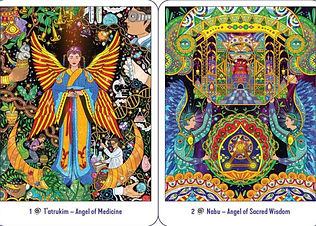
Andean & Amazonian
Foundational Worldview: Cosmos as Relationship and Reciprocity
South American Indigenous cosmologies are profoundly relational. Reality is not
divided into sacred and secular; it is organized through reciprocity, balance, and
obligation between humans, land, ancestors, and divine forces. Common
orientations across many Andean and Amazonian traditions include the Earth
as a live, conscious, and relational, humans as caretakers, not owners, time as
cyclical and layered, and spiritual authority arising from right relationship, not
hierarchy. Theology is embedded in agriculture, ecology, kinship, and ritual
exchange, rather than abstract doctrine.
Resources
Andean Worldview & Cosmology (Smithsonian National Museum of the American Indian)
Pachamama & Andean Reciprocity (University of Texas – LLILAS Benson Latin American Studies)
Pantheons and Divine Forces
South American cosmologies include rich pantheons of deities and sacred forces, especially within Andean traditions.
Key Andean Deities and Sacred Forces
-
Pachamama: Earth Mother, source of fertility, sustenance, and balance. Not a metaphor, but a living being requiring reciprocity.
-
Viracocha: Creator deity associated with emergence, order, and civilization.
-
Inti: Sun deity, source of life, authority, and agricultural cycles.
-
Apus: Sacred mountain spirits, guardians of regions and communities.
These beings are not worshipped for salvation, but honored through reciprocity, offerings, and ethical living.
Cosmological Structure: The Three Worlds
Many Andean traditions describe reality as composed of three interrelated realms:
-
Hanan Pacha: the upper world (sun, stars, higher beings)
-
Kay Pacha: the middle world (human life, animals, plants)
-
Ukhu Pacha: the inner or lower world (ancestors, seeds, transformation)
These realms are interconnected, not hierarchical. Balance among them sustains life.
Ayni: Sacred Reciprocity as Theology
At the heart of Andean theology is Ayni: sacred reciprocity.
Ayni governs:
-
Human-to-human relationships
-
Human-to-land obligations
-
Human-to-divine exchange
Nothing is taken without return. Offerings are not bribes; they are ethical participation in cosmic balance.
Colonization as Cosmological Violence
Spanish colonization inflicted profound theological devastation. Sacred sites were destroyed or converted into churches. Deities were demonized or erased. Rituals were criminalized. Indigenous cosmologies were labeled pagan or satanic. Unlike text-based religions, these cosmologies were inseparable from land, making displacement especially destructive.
Survival, Continuity, and Syncretism
Despite this violence:
-
Indigenous cosmologies persist in Andean and Amazonian communities
-
Deities survived through syncretism and oral transmission
-
Ritual reciprocity remains central
-
Elders and knowledge keepers maintain continuity
These traditions are not relics. They are living, guarded, and resilient.
.jpg)
Aboriginal Spirituality
The world as story, law, and living memory
Approximate Date Range: At least 60,000 years ago – Present
Geographic Origin: Australian continent
Aboriginal Australian spirituality represents the longest continuous spiritual tradition
known, developed by hundreds of distinct Aboriginal nations across Australia. It is not
a single religion, theology, or myth system, but a living network of land-based traditions,
each rooted in specific places, languages, and ancestral lines. There is no founder, no
universal scripture, no centralized authority. Instead, spirituality, law, ecology, and
identity are inseparable.
Resources
Australian Institute of Aboriginal and Torres Strait Islander Studies (AIATSIS)
The Dreaming (Dreamtime)
Creation, law, and ongoing reality
The Dreaming is often misunderstood as “mythic past.” In Aboriginal cosmology, it is timeless and ongoing. The Dreaming describes the ancestral beings who shaped the land, the origin of animals, plants, humans, and laws, and the moral and relational order of the world. These ancestral beings are not distant gods. They are immanent, embedded in rock formations, waterholes, songlines, and ceremonial sites. The land itself is alive with memory.
Cosmology
Land as sacred intelligence
Aboriginal cosmology does not separate spirit and matter, sacred and mundane, human and non-human. Everything participates in a relational field.
Key features include:
-
Cyclical time rather than linear history
-
No final judgment or apocalypse
-
No salvation outside of right relationship
-
Balance maintained through law and ceremony
Knowledge is localized. What is sacred in one place may not be sacred in another.
Songlines
Walking the world into being
Songlines are paths across the land that trace the journeys of ancestral beings. They function simultaneously as maps, stories, laws, ceremonial guides, or memory systems. By singing the land, people maintain the world. This is not symbolic. It is practical ecology encoded in narrative and ritual. To forget the songs is to risk imbalance.
Ethics and Law
Responsibility over belief
Aboriginal spirituality is not about belief systems. It is about obligation. Core values include care for land, respect for elders, kinship responsibility, knowledge earned through initiation, and silence where knowledge is not yours to carry. Some knowledge is restricted by age, gender, lineage, or place. This is not secrecy for power — it is protection of balance.
Ritual and Practice
Embodied, communal, and seasonal
Practices include ceremonial dance, body painting, storytelling initiation rites, and seasonal observances. These are not reenactments. They are maintenance rituals for the living world.
Impact of Colonization
Spiritual violence alongside physical violence
Colonization inflicted catastrophic harm:
-
Land theft
-
Sacred site destruction
-
Cultural suppression
-
Forced assimilation
Despite this, Aboriginal spiritual traditions survived, often in fragmentary or hidden forms, and continue to be revived and practiced today. This survival itself is spiritual continuity.
Mystery Schools
Initiation, Goddess Wisdom, and the Transmission of Gnosis
What a Mystery School Actually Was
Initiation, not belief. A mystery school was not a religion in the modern sense. It
did not require belief, creed, or conversion. It required initiation: a guided,
embodied encounter with death, rebirth, and direct knowing. Mystery schools
existed across the ancient world with remarkable consistency. Their shared
features included:
-
Experiential rites rather than dogma
-
Secrecy to protect the integrity of the experience
-
Ethical preparation before initiation
-
Direct encounter with the sacred, often through descent symbolism
-
Transformation of the participant rather than obedience to authority
“Mystery” did not mean something hidden forever. It meant something not transmissible by words alone. Knowledge was earned by undergoing it.
Resources
Sacred Texts Archive – Ancient Mysteries & Initiatory Traditions
Perseus Digital Library (Tufts University)
The Temple of Isis
The Great Initiatrix of the Western world
Isis is the central figure of Western mystery tradition. No other deity demonstrates the continuity, adaptability, and spiritual depth that Isis carried across cultures, languages, and centuries. Originally emerging in Egypt, Isis was not merely a mother goddess. She was healer, magician, queen, mourner, restorer of life, and keeper of sacred names.The Isis myth is explicit and initiatory. After Osiris is murdered and dismembered, Isis searches the land, gathers his scattered parts, and resurrects him through ritual, magic, and devotion. She then conceives Horus, the divine child, who becomes the future restorer of order.
This is not allegory. It is the template.
Isis mysteries involved:
-
Ritual death and rebirth
-
Purification and ethical preparation
-
Sacred sexuality (hieros gamos)
-
Healing and restoration
-
Direct experience of immortality
Unlike later patriarchal religions, the Isis cult:
-
Was open to women and men
-
Was open to slaves and elites
-
Did not demand ethnic or national identity
As Egyptian religion declined, Isis did not disappear. She migrated. Isis was worshipped in Greece, Rome, and throughout the Mediterranean. Her temples stood until the late Roman Empire. She was called Myriônymos — “She of Ten Thousand Names.”
This matters, because Isis becomes the hidden mother of later Marian devotion. The iconography of Mary and child does not emerge in a vacuum. It overlays an existing Isis–Horus image that people already understood in their bodies.
Isis is the feminine divine that survived suppression by becoming universal.
The Eleusinian Mysteries
Descent, grief, and return
Demeter and Persephone form the Greek counterpart to Isis. At Eleusis, initiates underwent rites centered on Persephone’s descent into the underworld and Demeter’s grief. These mysteries promised not belief in immortality, but the experience of it.
Participants included women and men, citizens and foreigners, as well as slaves and rulers. The rites were so powerful that initiates were forbidden to describe them under penalty of death, not to enforce control, but to preserve the integrity of the experience. Eleusis and Isis together reveal a pan-Mediterranean feminine mystery current rooted in descent, loss, and restoration.
The Essenes
Ethical gnosis and living initiation
The Essenes were a Jewish initiatory movement active during the late Second Temple period, associated with communities such as Qumran and the Dead Sea Scrolls.
Unlike Temple Judaism, the Essenes emphasized ritual purification, communal living, ethical discipline, direct relationship with the divine, and light vs corruption cosmology. They rejected the Jerusalem priesthood as compromised and corrupt. Initiation into Essene communities was slow and demanding, often taking years.
Their worldview included:
-
Apocalyptic awakening rather than violent overthrow
-
Expectation of a Teacher of Righteousness
-
Healing practices
-
Sacred meals
-
Baptism-like purification rituals
Within this initiatory ecosystem, figures like Yeshua (Jesus) and Mary Magdalene make far more sense than within later orthodoxy.
Mary Magdalene, in particular, aligns with:
-
Wisdom transmission
-
Anointing rites
-
Resurrection as realization
-
Teacher–disciple equality
Early Christian texts suppressed by orthodoxy preserve her role not as repentant sinner, but as initiated wisdom bearer.
The Essenes represent the ethical spine of Western gnosis: purity without hierarchy, devotion without domination.
Early Christian Gnostic Circles
Sophia remembered
Early Christianity was not unified. Alongside emerging orthodoxy existed multiple communities that emphasized gnosis over belief. These groups taught salvation through knowledge, not obedience, resurrection as awakening, not deferred reward, the divine feminine as Sophia (Wisdom), direct access to the divine. Mary Magdalene appears in these traditions as a primary transmitter, often in tension with male disciples. This is not a fringe claim. It is preserved in texts later deemed heretical because they threatened institutional authority.
Pythagorean Communities
Initiation as daily life
Pythagoras founded communities that were unmistakably mystery schools. Pythagorean initiates practiced communal living, long periods of silence, ethical discipline, sacred mathematics, music as spiritual attunement, belief in reincarnation and purification. Number, harmony, and proportion were not abstractions. They were spiritual realities shaping both cosmos and soul.
From Pythagoras to Plato
When initiation became philosophy
Plato was not a formal Pythagorean initiate, but he was profoundly shaped by Pythagorean thought. Plato translated mystery into dialogue. Key initiatory ideas preserved by Plato:
-
The immortality of the soul
-
Recollection (anamnesis) as the source of knowledge
-
The world of Forms as sacred pattern
-
Philosophy as preparation for death
Platonism becomes the intellectual ark that carries mystery through an increasingly hostile world. As ritual initiation declined, philosophy preserved the ideas of initiation, even as embodiment thinned.
Contrast Case: Mithraic Mysteries
What happens without the goddess
The Mithraic mysteries included initiation, ritual meals, and rebirth symbolism, but were male-only, militarized, and hierarchical. They illustrate how mystery shifts when feminine wisdom and relational balance are absent. Mithraism is included here as contrast, not as lineage.
Why the Mystery Schools Were Suppressed
Power fears direct access
Mystery schools threatened priesthoods, empires, patriarchal authority, and doctrinal control. They empowered women, slaves, and non-elites. They offered direct experience of the sacred without intermediaries.
Suppression was not theological. It was political.
What Was Lost — and What Survived
What was lost:
-
Embodied initiation
-
Goddess-centered wisdom
-
Ethical gnosis
-
Cyclical, relational spirituality
What survived:
-
Philosophy
-
Symbolism
-
Art
-
Esoteric fragments
-
Alchemy and Hermeticism
Mystery did not die. It went underground.
Why Mystery Matters Now
Every age of awakening faces the same question:
Will mystery be tended, or will it be controlled?
The ancient mystery schools remind us that spiritual power was never meant to build cages. It was meant to transform the human being from the inside out. What was once suppressed is returning not as nostalgia, but as necessity.
The Renaissance Synthesis
Awakening, Secrecy, and the Birth of Modern Power Mysticism. From Gnosis to Governance.
Why the Renaissance Matters Spiritually
Not just a cultural rebirth, but a consciousness inflection point
The Renaissance is often remembered as a flowering of art, science, and humanism.
Spiritually, however, it was something far more volatile. It was a moment when buried
knowledge resurfaced faster than collective wisdom could integrate it. Ancient texts,
symbols, and metaphysical frameworks long held in fragments suddenly became
available again, not within temple lineages or land-based traditions, but within courts,
universities, and emerging centers of power. This was not merely a rediscovery of ideas.
It was a confrontation with forgotten ways of understanding reality itself. Greek
philosophical texts, Hermetic writings attributed to Egypt, Jewish mystical traditions, Arabic science and astrology, and alchemical treatises all returned to Europe within a relatively compressed span of time. The medieval theological monopoly was already cracking. Authority based on unquestioned doctrine could no longer fully contain inquiry. A spiritual vacuum opened, and into that vacuum rushed curiosity, ambition, fear, inspiration, and hunger. This period bears striking resemblance to the present moment: rapid information access, institutional loss of legitimacy, spiritual curiosity outside official structures, and anxiety from centralized power. It was an awakening moment — but one without a mature container.
The Great Synthesis
When previously separate streams were intentionally braided
What followed was not a single movement, but a convergence. Hermeticism offered a vision of a living cosmos, intelligible through direct knowing. Kabbalah provided a structural map of divine power, fracture, and repair. Alchemy revealed matter as mutable and ensouled. Astrology restored humanity’s embeddedness within cosmic cycles. Christianity, still the dominant social language, became both the lens through which these ideas were filtered and the mask beneath which they could survive. Renaissance thinkers actively sought synthesis. They believed, often sincerely, that these traditions were fragments of a single primordial wisdom. Their aim was not initially control, but coherence. They were trying to rebuild a shattered inheritance. But synthesis changes things. When systems that once lived in different contexts are braided together, they become portable. They can be diagrammed, abstracted, and taught without land, lineage, or embodied ritual. Symbols become interchangeable. Mystery becomes conceptual. Knowledge becomes transmissible without initiation into place, body, or community. This is where “esotericism” becomes systematic.
The Rise of Initiation and Secrecy
Protection, then preservation, then power
At first, secrecy was protective. The political and religious climate of the time was hostile to deviation. People were imprisoned, exiled, or killed for unapproved ideas. Some practices were genuinely destabilizing without preparation. Restriction was, in many cases, an ethical decision. But secrecy has gravity. Once knowledge is restricted, it can be curated. Once curated, it can be ranked. Once ranked, it can be leveraged. Over time, initiation quietly shifts from a measure of readiness to a marker of status. Silence ceases to be reverence and becomes insulation. Mystery, once tended, begins to be owned. The problem was never secrecy itself. The problem was secrecy fused with hierarchy.
From Mystery Schools to Power Structures
When gnosis stops liberating and starts managing
This is the subtle pivot point where spiritual traditions begin to harden into power structures. Mystery schools that once existed to transform participants increasingly served to stabilize elites. Symbolism that once revealed reality began to shape behavior. Ritual that once aligned the soul began to organize loyalty. The question quietly changed from How does one awaken? to Who is permitted to know? None of this required malice. It required only fear, ambition, and the human tendency to preserve advantage. Over generations, gnosis gave way to governance. Inner transformation was externalized into architecture. Spiritual insight, once liberating, was repurposed to authorize hierarchy. The sacred no longer dissolved power. It justified it.
Cult Dynamics and the Ethics Collapse
A human systems problem, not a supernatural one
Where secrecy, hierarchy, and belief in metaphysical efficacy intersect without accountability, abuse potential emerges.
This dynamic appears repeatedly across cultures and eras. It is not the result of “dark teachings,” but of asymmetry: power without consent, knowledge without reciprocity, initiation without exit. Mystery without consent becomes domination. Initiation without accountability becomes coercion. This is not unique to Western esotericism. It is a human pattern.
The Birth of the Modern “Invisible Architecture”
How symbolic power outlived belief
The symbolic frameworks developed during the Renaissance did not vanish when belief systems shifted. They migrated.
As explicit faith waned, symbolic power embedded itself in institutions: law, finance, bureaucracy, media, and governance. The metaphysical scaffolding persisted even as its theological language faded. This is why modern systems often feel spiritually hollow yet strangely compelling. The symbols still work. The stories still move people. But the soul has been removed from the equation. The resulting structure can feel like a “matrix,” not as a science-fiction fantasy, but as an invisible architecture of meaning that governs behavior while denying its own mythic roots. The cage is enforced not by guards, but by internalized narratives and abstraction.
What Was Lost
The feminine, the embodied, the relational
Something essential was lost in this process. The divine feminine, once central to wisdom traditions, was abstracted or suppressed. Sophia became intellect without tenderness. Shekhinah became theology without presence. Inanna’s descent became metaphor rather than lived initiation. Land-based wisdom was replaced by conceptual mastery. Cycles were replaced by hierarchies. Tending was replaced by management. This is the patriarchal fracture: mystery feared rather than held, controlled rather than trusted.
Closing Reflections
From Awakening to Cage — and Why This Matters Now
Seen symbolically, one could interpret this period as emerging in the long shadow of Christendom’s consolidation. After centuries of unified religious authority, something fractured. Whether framed as theological epochs, archetypal cycles, or historical coincidence, the resonance remains. It is also striking that the structures birthed in the wake of this synthesis matured alongside modern empire, particularly the American project, which carried Enlightenment ideals, esoteric symbolism, and abstraction to their logical conclusion. Whether one interprets this as mythic symmetry or historical convergence, the full-circle feeling is difficult to ignore as that era now wanes.
We find ourselves again in a moment of unraveling.
Information is widely available. Institutions are losing legitimacy. People are rediscovering ancient frameworks without intermediaries. The same questions that haunted the Renaissance are resurfacing: Who holds knowledge? Who decides truth? What does awakening require? What happens when power encounters mystery?
The danger is repetition. Every awakening carries the risk of calcification. Every rediscovery carries the temptation to control what should be tended. This section exists not to accuse the past, but to illuminate it, so the pattern does not quietly reassert itself. Mystery is not the enemy. Power without care is. This was not the death of mystery. It was its imprisonment. And every age that rediscovers the sacred must decide whether it will repeat that mistake — or finally learn to hold what is powerful without turning it into a cage.
Zionism
Political Nationalism, Apocalyptic Accelerationism, and the Manufacture of End Times
What Zionism Is — and Is Not
A modern political ideology, not a religion. Zionism is not Judaism and not Christianity.
It is a modern political nationalist movement that emerged in late 19th-century Europe,
shaped by fear, displacement, and the rise of European ethno-nationalism. Judaism
existed for millennia without Zionism. Christianity existed for nearly two thousand
years without Zionism. Zionism arose in a specific historical context:
-
rising European antisemitism
-
collapsing empires
-
colonial statecraft models
-
nationalist identity movements
Its earliest architects were largely secular, not mystical. The movement sought security
through state power, not spiritual fulfillment. What followed was not theology — but
mythic political engineering.
Example: www.christianzionism.org
*note- we are not affiliated with this website or any Zionist belief systems.
The Apocalyptic Turn
When politics fused with end-times mythology
The most destructive form of Zionism emerges not from its nationalist roots, but from
its later fusion with Christian apocalyptic theology, especially dispensationalism.
The modern “rapture” narrative does not come from Judaism and does not come from
early Christianity. It originates with John Nelson Darby in the 1800s and spreads
through evangelical networks, political lobbying, and Cold War geopolitics. This
worldview treats catastrophe as sacred, peace as delay, ethics as subordinate to
prophecy. This is not religion. This is apocalyptic accelerationism.
Manufactured Urgency
Red heifers, Third Temples, and prophetic theater
Modern fixation on red heifers and Third Temple reconstruction reflects a small
extremist fringe, disproportionately amplified by apocalyptic Christian interests.
Key realities:
-
Rabbinic Judaism historically forbids forcing messianic timelines
-
Most Jewish communities reject Third Temple activism
-
Messianic impatience is considered spiritually dangerous
These symbolic acts persist because they:
-
generate urgency
-
provide spectacle
-
validate end-times narratives
-
normalize ongoing violence
This ideology is openly promoted, not hidden.
How This Ideology Embedded Itself in Power
Myth, trauma, statecraft, and leverage
Zionism’s geopolitical entrenchment followed recognizable mechanisms:
-
British Imperial Strategy
– The Balfour Declaration and colonial partition logic -
Post-Holocaust Moral Shielding
– The legitimate trauma of genocide was politically leveraged
– The modern state of Israel was established where Palestine already existed, displacing an indigenous population
– Criticism of state actions became conflated with hatred, insulating policy from accountability -
Cold War Strategic Alliances
– Military positioning and regional dominance -
Evangelical Political Mobilization (U.S.)
– Massive voting blocs driven by end-times belief -
Well-Organized Lobbying Networks
– Coordinated funding, messaging, and political pressure
– Documented cases where blackmail, kompromat, or coercive leverage have been used by various actors within geopolitical power struggles to influence government and media behavior -
Narrative Enforcement Mechanisms
– Accusations of bad faith used to shut down legitimate critique
– Media self-censorship driven by reputational fear
This is not unique to Zionism. It is how modern power sustains itself.
Doomsday Logic as a Control System
Why this functions structurally as a death cult
Any ideology that treats the present world as disposable, frames mass suffering as necessary, accelerates toward catastrophe, suspends ethics for destiny....
functions as a death-oriented political cult, regardless of the symbols it uses. End-times logic disables moral responsibility and sanctifies destruction.
What This Ideology Erases
This fusion of nationalism and apocalypse destroys:
-
Jewish ethical traditions of restraint and debate
-
Christian teachings centered on compassion and presence
-
the sanctity of life in the present moment
-
Palestinian humanity
-
feminine, cyclical, life-preserving spirituality
When “the end” becomes sacred, life becomes expendable.
Naming the Pattern Clearly
This is not about Jews. This is not about Christians. It is about apocalyptic ideology fused to state power — a pattern that appears wherever myth is used to justify domination. Naming it is not hatred. It is discernment.
Closing Reflection
Light dissolves manipulation
-
No authentic spiritual tradition requires mass death to fulfill itself.
-
No sacred teaching demands catastrophe as proof of truth.
-
Apocalyptic inevitability is a lie — and lies collapse when named.
-
Truth does not need to shout.
-
It simply removes the fog.
Reputable Free Resources (Critical & Verifiable)
Stanford Encyclopedia of Philosophy — Zionism
Jewish Currents — Critical Jewish Perspectives
Institute for the Study of Christian Zionism
New Age Spirituality

Democratization, Fragmentation, and the Crisis of Discernment
What “New Age” Actually Is
A movement, not a lineage
“New Age” is not a single tradition, theology, or school. It is a cultural phenomenon that
emerged primarily in the mid–20th century, drawing loosely from earlier mystical,
esoteric, and Eastern traditions while discarding most formal structures of initiation,
discipline, and lineage. New Age spirituality arose at the intersection of post-war
disillusionment with institutions, the counterculture of the 1960s–70s, psychological
self-help movements, popularized Eastern philosophies, and occult revival traditions (Theosophy, Hermetic Kabbalah, Jungian archetypes). It promised something deeply appealing: spiritual access without gatekeepers. In that sense, New Age spirituality was a reaction to centuries of religious control.
What the New Age Preserved
Fragments of real wisdom
It is important to be fair: New Age spirituality did not invent its core ideas. It preserved fragments of genuine traditions that had long been inaccessible to most people. Among the things New Age culture successfully reintroduced:
-
Meditation and mindfulness
-
Energy as a meaningful metaphor for experience
-
Chakras and subtle body awareness
-
The sacred feminine
-
Reincarnation and karma (loosely understood)
-
Healing as holistic rather than purely mechanical
-
The idea that consciousness matters
For many people, New Age spirituality was a first doorway out of materialism and rigid religion. That matters.
Where Things Began to Fracture
When access replaced initiation
The core problem with New Age spirituality is not curiosity or openness. It is the loss of containment. Ancient traditions placed power behind, ethical preparation, long apprenticeship, community accountability, or embodied discipline. New Age culture largely removed these safeguards. As a result techniques were separated from context, symbols were detached from meaning, practices were adopted without integration, profound experiences were mistaken for completion. Mystery became content.
Spiritual Bypassing
Light used to avoid depth
One of the most significant distortions to emerge within New Age culture is spiritual bypassing: the use of spiritual language to avoid psychological, relational, or ethical work.
Common expressions include:
-
“Just raise your vibration”
-
“Everything happens for a reason”
-
“Choose love over fear” (used to silence anger or grief)
-
“You manifested this” (used to blame suffering)
These ideas often borrow language from legitimate traditions but remove their grounding. In authentic systems descent precedes ascent, shadow precedes illumination, and responsibility accompanies power. New Age culture often attempts to skip descent.
Power Without Accountability
When manifestation replaces ethics
Many New Age frameworks emphasize manifestation, intention, and personal reality-creation. In moderation, these ideas can empower agency. Without ethics, they become dangerous. Problems arise when structural injustice is reframed as personal failure. Illness is treated as moral deficiency. Wealth is equated with spiritual advancement. Discernment is replaced by affirmation This mirrors earlier historical patterns: power metaphysics without responsibility. The issue is not belief that consciousness influences reality. The issue is who is protected when things go wrong.
Commercialization of the Sacred
When spirituality becomes a marketplace
New Age spirituality developed alongside late-stage capitalism, and the two became entangled. Spirituality became a brand, a lifestyle, a personal identity, and a revenue stream. Crystals, retreats, certifications, and influencer authority replaced elders, lineages, and community care. This does not make all practitioners insincere. It does make the ecosystem structurally unstable.
Relationship to Earlier Traditions
Inheritance without lineage
New Age spirituality borrows heavily from:
-
Hermetic principles (often simplified)
-
Alchemy (reduced to metaphor)
-
Kabbalah (stripped of ethical restraint)
-
Eastern practices (removed from cultural context)
-
Goddess traditions (aestheticized more than lived)
What is often missing is depth, history, accountability, consent, or integration. The result is a spiritual language that sounds ancient but functions in a modern psychological marketplace.
Why New Age Took Hold
A real hunger, imperfectly met
New Age spirituality did not arise because people were foolish. It arose because people were starving:
-
For meaning beyond materialism
-
For spiritual experience without domination
-
For healing outside medical reductionism
-
For the feminine divine
-
For personal agency
New Age was a symptom of unmet needs.
The Crisis of Discernment
Everything true is not helpful; everything helpful is not true. Without shared standards, discernment collapses. In New Age spaces, this often looks like all beliefs treated as equally valid, critique framed as “low vibration”, abuse hidden behind spiritual language, or teachers immune to accountability. This recreates the very power dynamics New Age claimed to reject.
New Age and the Current Moment
A transition, not an endpoint
As institutions continue to collapse, New Age spirituality is also reaching its limits. Many people sense that affirmation without grounding is insufficient. What is emerging now resembles a second maturation desire for embodied practice, trauma-informed spirituality, nervous system awareness, ethical accountability, and reconnection to lineage without hierarchy. This is not a rejection of New Age. It is a growing up.
Ancient Aliens & UFOs
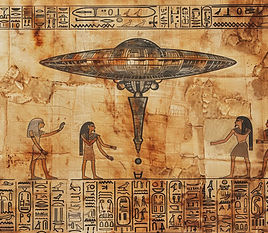
Comparative Symbols, Lost Civilizations, Modern Contact Narratives, and the Re-Enchantment of the Cosmos
The Global Pattern Question
Why similar symbols appear across time and geography
One of the most compelling drivers of Ancient Astronaut and sky-being theories is not a
single artifact or text, but the repetition of highly specific visual motifs across cultures
separated by oceans, millennia, and language.
Frequently cited examples include:
-
Figures carrying handbag-like objects
-
Pine-cone or seed-shaped items held near the head
-
Winged beings descending from the sky
-
Non-human teachers bringing law, agriculture, or astronomy
-
Civilizing figures who later depart or withdraw
These motifs appear in:
-
Sumerian and Assyrian reliefs
-
Göbekli Tepe carvings
-
Mesoamerican stonework
-
Egyptian temple art
Scholars traditionally explain these through:
-
Cultural diffusion
-
Shared symbolic archetypes
-
Convergent myth-making
Ancient Astronaut theory proposes an additional possibility: a shared external referent, whether literal, symbolic, or misunderstood. This section does not resolve the question. It names the pattern density, which is real regardless of interpretation.
The Anunnaki and the Prometheus Pattern
Civilizers, transgressors, and the price of knowledge
Anunnaki originate in Sumerian, Akkadian, and Babylonian texts as powerful beings involved in shaping order, kingship, and cosmic law. In the original texts, they are divine authorities, administrators of fate, and linked to heaven and earth. In modern reinterpretation, particularly Ancient Astronaut theory, they are reframed as advanced non-human intelligences, genetic engineers or overseers, or ruling elites of a proto-civilization. What keeps this narrative alive is not evidence alone, but its structural similarity to Prometheus myths worldwide: Knowledge is given to humanity. Knowledge disrupts an existing order. Givers are punished or cast out. Humanity gains civilization and suffering simultaneously
This pattern appears in: Prometheus (Greece), The Watchers (Book of Enoch), the Serpent in Eden, Quetzalcoatl, and modern alien contact narratives. Whether literal, symbolic, or psychological, the Anunnaki function as a mythic explanation for civilization itself — why humans possess sudden knowledge yet live with chronic anxiety about its source. This narrative has never gone away because it speaks to a deep question: What if civilization was never entirely ours?
Atlantis and the Reset Hypothesis
Lost civilization, memory of collapse, or symbolic warning
Atlantis enters Western thought through Plato, who describes an advanced maritime civilization destroyed in a catastrophic event. Atlantis functions on multiple levels: A moral warning about hubris. A memory container for collapse. A placeholder for lost prehistory. Or a mythic “reset” archetype. Modern theories connect Atlantis to ice Age cataclysms, rapid sea-level rise, lost coastal civilizations, and cyclical collapse and rebirth. There is no archaeological consensus for Atlantis as Plato described it.. There is growing evidence that human civilization is older than once believed, complex societies existed earlier than assumed, and catastrophic resets have occurred repeatedly. Atlantis persists because it holds the unsettling idea that advanced civilizations can disappear almost entirely, leaving myth as the only survivor.
Stargates and Threshold Theories
Portals, not spacecraft
Stargate theories propose that certain ancient sites were not monuments, but threshold technologies — ritual, energetic, or consciousness-based gateways. Often cited sites include: Giza, Göbekli Tepe, Stonehenge, and Mesoamerican pyramids.
In this model travel is dimensional rather than spatial, “Aliens” are inter-realm intelligences, and initiation and altered states are key. This aligns more closely with Shamanic traditions, mystery school initiations, and angelic and daimonic cosmologies. The theory reframes “ancient aliens” as ancient intercessors, not astronauts.
The Galactic Federation Narrative
A modern angelology
Belief in a Galactic Federation emerges in 20th- and 21st-century contact narratives as a structured cosmic governance system. Typically described as a coalition of non-human intelligences, organized by ethical or developmental hierarchy, and observing humanity under a non-intervention rule. Frequently named “cultures” include greys (technological operators), nordics (human-adjacent guardians), and reptilians (power-oriented intelligences) These function less as biological species and more as symbolic roles, mirroring angels, archons, watchers, or demons. This is a modern mythic cosmology, not a verified taxonomy.
Orbs, Contact, and UFO of God
UFO of God by Chris Bledsoe documents repeated orb phenomena, interpreted through a spiritual lens.
Reported characteristics include luminous spheres, intelligent movement, repeated personal contact, religious and Marian symbolism. The significance of this work lies in its tone: non-militarized, non-apocalyptic, and experiential rather than doctrinal. It sits at the intersection of mysticism, contact experience, and modern revelation literature.
Scientology and Institutional Alien Theology
Scientology, founded by L. Ron Hubbard, demonstrates how extraterrestrial myth can be formalized into institutional religion.
Key features include:
-
Galactic civilizations
-
Soul imprisonment narratives
-
Cosmic trauma
-
Proprietary salvation methods
Scientology is important here not for its truth claims, but as a case study. What happens when alien mythology becomes doctrine, hierarchy, and control.
Hollywood, Science Fiction, and Feedback Loops
Myth writing itself back into belief
Science fiction has not merely reflected alien mythology — it has shaped it. Recurring themes include:
-
Government cover-ups
-
Chosen contactees
-
Hybridization
-
Disclosure events
-
Benevolent vs hostile visitors
These stories form a feedback loop: Myth → fiction → belief → myth. Hollywood becomes a myth engine, not just entertainment.
Area 51 and Participatory Myth
From secrecy to ritualized humor
Area 51 represents secrecy, power, and forbidden knowledge.
The 2019 Storm Area 51 event transformed suspicion into playful collective ritual, revealing:
-
Distrust of authority
-
Desire for transparency
-
Humor as coping mechanism
Myth became participatory rather than passive.
Declassified Documents and Congressional Testimony (2023–2024)
Unknowns acknowledged
U.S. congressional hearings in 2023–2024 addressed UAPs (Unidentified Anomalous Phenomena), including:
-
Pilot testimony
-
Radar and sensor data
-
Declassified imagery
-
Claims of recovered materials
These hearings did not confirm extraterrestrials.
They did confirm:
-
Unknown phenomena
-
Institutional secrecy
-
Limits of current explanation
Mystery re-entered official discourse.
What This Category Is Actually Doing
Myth under pressure
Ancient Aliens and UFO spirituality persist because they:
-
Re-enchant a disenchanted world
-
Externalize origin and destiny
-
Express distrust of authority
-
Reflect technological awe
-
Repackage ancient sky myths
This is not proof. It is myth adapting to modern conditions Holding the unknown without surrendering discernment. It is possible to stay curious, respect mystery, question authority, and reject false certainty. Mystery does not demand belief. Belief does not excuse abdication of responsibility. This category belongs here because it is active, influential, and revealing — not because it is settled.

How to navigate:
-
Use the arrows at the top of the table to browse religions or philosophies. You can also swipe to scroll on mobile. There are 31 to explore!
-
Click the tab title of the religion to load the information in the table.
-
Abrahamic Religions and Gnosticism each have 3 breakout links which will open another page for a deeper dive into the branches.
-
Each tab will also contain additional external links to historical, religious, and scholarly texts.

"We leave people more sovereign than we found them. Teachings, rituals, and relationships are meant to strengthen inner authority, not replace it."
-from our Ethos