


Inner Journey &
Consciousness Practices

Historical Lineage
-
Buddhist Traditions: Shamatha (focused attention) and Vipassana (insight) practices relied on guided contemplation for centuries.
-
Hindu & Yogic Lineages: Visualization and mantra-based guidance were used to structure internal states.
-
Western Mysticism: Ignatian contemplation and Hermetic inner ascent relied on guided inner imagery.
-
Modern Somatics & Psychology: Visualization and guided imagery were adopted for stress reduction and behavioral change.


Guided Meditation
How it works
Resource Links
Guided meditation is the deliberate use of directed attention, imagery, and verbal framing to enter specific states of awareness. Unlike spontaneous altered states, guided meditation is volitional, structured, and reversible, making it one of the safest entry points into inner journey work. The importance of meditation in spiritual practices cannot be overstated. This is the entry-point for nearly everything we teach.
In practical terms, meditation helps regulate the nervous system, while allowing the participant to process past emotions or trauma. In more mystical terms, meditation is the gateway to awakening, shadow work, and unlocking your gifts.
Historically, guided inner attention was not framed as self-help, but as mental training. Teachers, monks, and initiates used verbal guidance to shape perception, cultivate insight, and stabilize awareness before deeper practices were attempted.
Guided meditation works by:
-
narrowing attentional bandwidth,
-
reducing cognitive noise,
-
stabilizing awareness in a chosen internal frame.
This allows practitioners to explore sensation, imagery, emotion, or symbolic content without dissociation or loss of agency.
A note for those that may struggle with meditation due to ADHD, ASD, or sensory issues: Difficulty clearing the mind, or even aphantasia (the inability to visualize in your mind's eye) can be frustratingly common. If you find yourself struggling in this way, somatic work may be a similar path for you. Repetition and plant-based medicine have also been known to help in this instances.
Below are some links to resources that provide tips to meditating and the benefits. We also have some guided meditations on our shared playlist page. People tend to overthink meditation... starting is as easy as closing your eyes, breathing slow, and clearing your mind to the best of your ability.
🔗UCLA Mindful Awareness Research Center (Free Guided Meditations)
🔗Plum Village – Free Guided Meditation Library


Energy Work
& Subtle Body Awareness
How it works
Resource Links
Energy work refers to attentional interaction with perceived internal sensations, flows, or fields, often described as subtle energy. Regardless of metaphysical interpretation, practitioners consistently report repeatable internal sensations associated with focus, breath, and intention. These are the chakras, or energy centers, and there is probably no way we could adequately sum up the depth of this practice on a page. There is also the Chinese version of the energy centers (Qigong and dantian), but for simplicity we'll stick to the most commonly known 7 chakras. You can clear energy "blocks" through meditation and shadow work. Every block you heal allows energy to more freely flow through the fascia and body. We encourage you to explore the plethora of information that has been published on this topic.
This section treats energy work phenomenologically: what is experienced, not what must be believed.
Energy work typically involves:
-
focused attention on internal sensation,
-
breath-assisted amplification,
-
visualization as a stabilizing interface.
Effects include increased bodily awareness, emotional release, and a sense of internal coherence. These experiences do not require metaphysical assumptions to be valid or useful.
🔗Locally Well- 10 Types of Energy Healing (Energy Modalities)
🔗PubMed Central – Biofield & Interoception Studies
🔗The Subtle Energy Body- Complete Guide


Tantra
Energetic & Consciousness
How it works
Resource Links
Tantra, in this context, refers not to sexual technique, but to a system of embodied consciousness training that integrates attention, breath, sensation, and awareness. Historically, tantra was a liberation technology, not a lifestyle aesthetic. It is speculated that this is the cornerstone of Hieros Gamos, the bridal chamber ritual taught in Isis and Essene mystery schools.
This section explicitly excludes performative or eroticized interpretations.
Tantric practices:
-
circulate attention through the body,
-
integrate sensation without avoidance,
-
dissolve habitual splits between mind and body.
When practiced responsibly, tantra increases presence and integration, not arousal or dissociation.
🔗Oxford Centre for Hindu Studies – Tantra Texts (Free Papers)
🔗Internet Archive – Classical Tantric Texts (Translated)
🔗Stanford Encyclopedia of Philosophy – Tantra Entry


Lucid Dreaming
& Conscious Sleep States
How it works
Resource Links
Lucid dreaming occurs when awareness arises within the dream state, allowing conscious navigation of inner landscapes. Unlike astral projection, lucid dreaming remains fully internal, making it a key inner journey practice.
Historically, dreams were considered valid spaces of learning and initiation, not random byproducts of sleep.
Lucidity emerges when:
-
meta-awareness activates during REM sleep,
-
the dreamer recognizes the dream state,
-
intentional engagement becomes possible.
Lucid dreaming enhances insight, creativity, and emotional processing.
🔗Stanford Lucidity Institute – Free Research & Guides
🔗Sleep Foundation – Lucid Dreaming Science
🔗NIH – Dreaming & Consciousness Research

Shadow Work
& Inner Integration
How it works
Resource Links
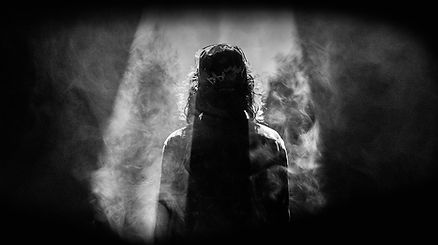
Shadow work refers to conscious engagement with disowned, unconscious, or avoided aspects of the self. It is not about negativity, but about integration. This section anchors inner journey work ethically, preventing spiritual bypassing. This is what is truly meant by the saying "going within". During meditation or somatic work you likely will naturally start to go through your mental memory catalog. When this happens, you don't try to maintain control or direction, but rather surrender to the journey and confront each emotion as it arises allowing yourself to feel it fully- the lessons it contains.
Shadow work involves:
-
reflective awareness,
-
emotional honesty,
-
symbolic processing.
It is most effective when paired with somatic regulation, therapy, guided meditation, and deconstruction.
🔗Jung Institute – Free Essays & Lectures
🔗Internet Archive – Carl Jung Works (Public Access)
🔗APA – Emotional Integration Resources


"We leave people more sovereign than we found them. Teachings, rituals, and relationships are meant to strengthen inner authority, not replace it."
-from our Ethos